Custom Luxury Vinyl Herringbone Flooring for Global B2B Buyers
Bespoke Luxury Vinyl Herringbone Flooring: Delivering Customized Solutions for International Bulk Procurement Markets
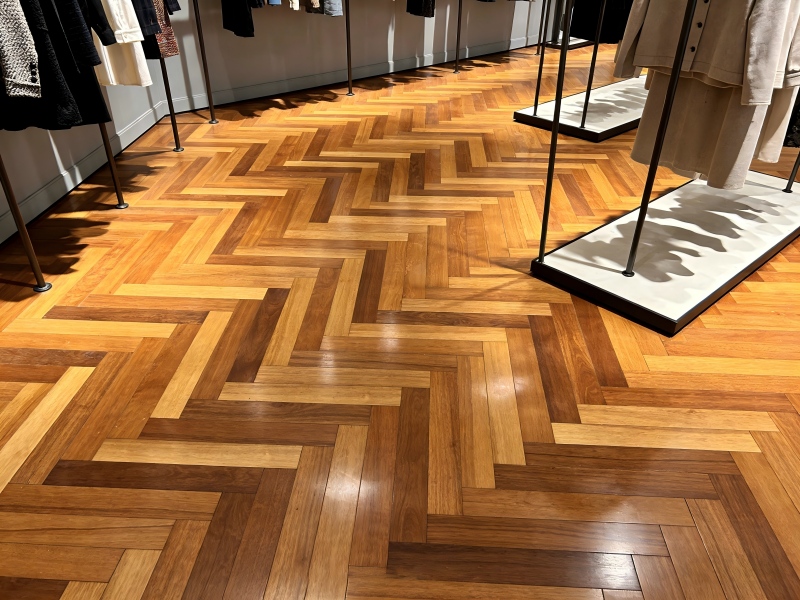
The global architecture and construction sectors are witnessing a sustained preference for geometric elegance in interior spaces, with the herringbone pattern emerging as a dominant design language across residential, hospitality, and commercial projects . Luxury Vinyl Herringbone Flooring has transcended its role as a mere functional surface to become a strategic design element, offering the timeless appeal of classic parquet combined with the high-performance characteristics of modern polymer engineering. For overseas buyers—including custom product procurement specialists, import-export trading firms, and industry integrators—the shift toward customized specifications represents not just a market opportunity but a fundamental requirement for differentiation in competitive regional markets. This guide provides a technical deep-dive into navigating the complexities of overseas bulk procurement of customized herringbone flooring, emphasizing the critical role of robust quality control systems from manufacturing hubs to project sites.
The Evolution of Market Demand for Customization
The contemporary flooring market is no longer satisfied with standardized offerings. A significant driver of growth in the Luxury Vinyl Tile (LVT) segment—projected to expand substantially—is the end-user's desire for unique, project-specific aesthetics that standard catalogs cannot fulfill . This demand for personalization is reshaping the relationship between suppliers and buyers, moving from transactional exchanges to collaborative development partnerships.
Procurement professionals are increasingly seeking partners capable of delivering customized specifications that address specific regional trends and performance requirements. In North America, for instance, there is a pronounced demand for wider planks and darker, more saturated wood tones with enhanced wear layers suitable for high-traffic residential and light commercial applications. The European market, with its deep-rooted appreciation for historical design integrity, often requires precise replication of classic oak or walnut grains with matte, natural finishes, alongside strict compliance with environmental and indoor air quality standards like CE and REACH . Meanwhile, the rapidly growing Asia-Pacific and Middle Eastern markets exhibit a preference for bold contrasts, contemporary grey tones, and the integration of advanced features like acoustic underlayments for multi-story residential towers and hospitality venues .
This regional diversity underscores the necessity for suppliers who do not merely sell products but offer a flexible manufacturing framework. True customization extends beyond surface aesthetics to encompass the entire product engineering process, ensuring that the flooring performs optimally under varied climatic and usage conditions. This capability is the cornerstone of successful overseas bulk procurement strategies, enabling buyers to cater to local tastes with confidence.
Deconstructing Customization: From Raw Material to Finished Plank
For the B2B buyer, understanding the layers of customization available is essential for effective communication with manufacturing partners and for developing products that stand out in the marketplace. Leading manufacturers, particularly those in China's vertically integrated production hubs in Zhejiang, Shandong, and Henan provinces, offer extensive modification options across several key dimensions .
Core Composition and Dimensional Engineering
Customization begins with the product's structural integrity. Buyers can specify the core type—be it Stone Plastic Composite (SPC) for maximum rigidity and dimensional stability, or Wood Plastic Composite (WPC) for a quieter, softer footfall . Within this, parameters such as overall thickness (typically ranging from 4mm to 7mm for rigid core products) and the thickness of the attached underlayment (e.g., IXPE or EVA foam) can be adjusted to meet specific acoustic or subfloor preparation requirements .
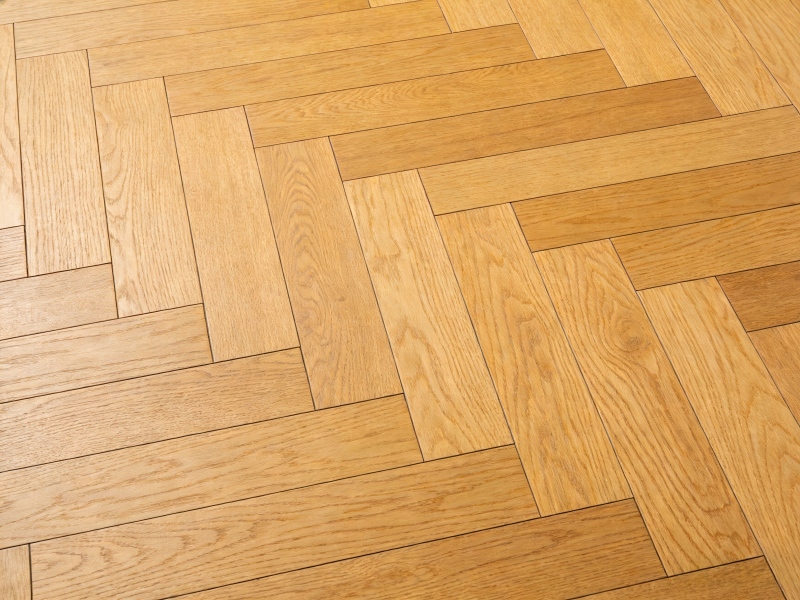
Dimensional customization is equally critical. While standard plank sizes are readily available, true market differentiation often lies in non-standard lengths and widths that create a more authentic or unique visual. The precision of the herringbone cut itself—the exact angle and fit of each plank—is paramount. Advanced manufacturers utilize precision die-cutting tools to ensure tight, seamless joints that are essential for the pattern's geometric integrity and long-term performance .
Aesthetic Tailoring: Color, Texture, and Gloss
The visual and tactile experience of the flooring is where customization delivers its most potent impact. Digital printing technology has revolutionized this space, allowing for high-resolution replication of natural wood grains, stone, or even abstract designs. Buyers can collaborate with suppliers to develop exclusive patterns by providing reference images, physical samples, or Pantone/RAL color codes for precise color matching .
Beyond color, the surface finish is a key differentiator. Options range from high-gloss to matte, and include textured finishes like Embossed-in-Register (EIR), where the surface texture aligns perfectly with the printed wood grain, creating an incredibly realistic haptic experience . The wear layer, a transparent top coat, is also customizable, typically from 0.3mm to 0.7mm or higher. Its thickness directly correlates with the product's durability and warranty, allowing buyers to specify a layer that aligns with the project's traffic expectations—a critical factor in commercial tenders .
Branding and Packaging for Market Positioning
For importers and distributors building their own brand, customization extends to the final presentation. OEM (Original Equipment Manufacturing) and ODM (Original Design Manufacturing) services enable the creation of private-label lines. This includes custom-branded packaging, installation manuals, and even co-branding on the planks themselves. Tailored packaging not only reinforces brand identity but can also be designed to optimize palletization and container loading, reducing freight costs for overseas bulk procurement orders .
Regional Market Insights and Procurement Preferences
Aligning product specifications with regional preferences is the hallmark of a successful procurement strategy. Data indicates that while North America remains a dominant consumer, the Asia-Pacific region is the fastest-growing market, fueled by urbanization and a surge in premium residential projects .
North America: The emphasis here is on durability and ease of installation. Buyers frequently prioritize products with robust click-lock systems (e.g., Unilin or Valinge compatible), thick wear layers (20 mil or higher for commercial projects), and certifications like FloorScore or GREENGUARD Gold, which are essential for LEED certification and market acceptance . The trend leans towards wider planks in shades like greige and warm caramel, offering a modern take on traditional patterns.
Europe: This market is characterized by stringent regulatory requirements and a demand for design authenticity. Compliance with REACH regulations and low VOC emissions is non-negotiable. Aesthetically, there is a strong preference for realistic wood visuals with matte, wire-brushed, or hand-scraped textures. The color palette often includes natural oaks, light Scandinavians, and charred or smoked effects. Customization requests frequently involve replicating specific historical patterns or achieving a perfect match with existing architectural details .
Middle East & Asia-Pacific: These regions present a dynamic mix of ultra-modern and classic tastes. In the Middle East, luxury hospitality and high-end residential projects drive demand for bold, elegant designs with high-gloss or metallic finishes. In the Asia-Pacific, particularly in China and Southeast Asia, there is a growing appetite for hybrid products that combine aesthetic appeal with functional benefits like antimicrobial properties and enhanced waterproofing for humid climates .
Material Integrity and Compliance Verification
A credible supplier will readily provide documentation confirming the use of virgin raw materials, which is crucial for ensuring long-term color stability, flexibility, and resistance to plasticizer migration . Furthermore, adherence to international performance standards must be verifiable through third-party test reports. Key certifications and tests include:
Indoor Air Quality: FloorScore, GREENGUARD Gold, or similar certifications confirming low VOC emissions .
Performance Metrics: ASTM standards for slip resistance (E303), abrasion resistance (ISO 4918), and dimensional stability .
Safety Compliance: Fire ratings (e.g., ASTM E648 or EN 13501-1), and testing for heavy metals and phthalates to meet REACH and RoHS requirements .
Durability: Verification of wear layer thickness and its resistance to wear and tear under EN 660-2 or equivalent standards .
The ASSURE CERTIFIED program, developed by the Resilient Floor Covering Institute and SCS Global Services, exemplifies the kind of industry-wide quality standard that buyers should look for. It includes on-site manufacturing facility audits and rigorous product testing, offering an additional layer of assurance .
Operational Reliability Metrics
Beyond product certifications, evaluating a supplier's operational capabilities is crucial for risk mitigation in overseas bulk procurement. Experienced buyers assess metrics such as:
On-Time Delivery Rate: A rate consistently above 95% indicates strong production planning and logistics management .
Reorder Rate: A healthy reorder rate (e.g., above 25-30%) is a strong indicator of sustained customer satisfaction .
Responsiveness: Suppliers who respond to inquiries within hours typically have dedicated, organized teams capable of managing complex order details and potential issues proactively .
Factory Audits: Where possible, conducting physical audits or utilizing third-party inspection agencies (like SGS, Bureau Veritas, or TÜV) during the pre-shipment stage provides the ultimate verification of production capacity and quality control adherence .
Navigating the Procurement Workflow
Successfully executing a custom herringbone flooring project involves a structured approach. Buyers should adopt a phased workflow to minimize risk and ensure the final product meets exact specifications.
Define and Specify: Begin with a comprehensive product brief detailing core type, dimensions, wear layer, color (using Pantone/RAL codes or physical samples), texture, locking system, and branding requirements .
Supplier Qualification: Shortlist suppliers based not only on pricing but on verified certifications, customization capabilities, and operational metrics as outlined above .
Sample Validation: Always request physical samples of the proposed custom product. Evaluate them under various lighting conditions for color accuracy, test the click-lock mechanism, and assess the realism of the texture. This step is non-negotiable before committing to bulk production .
Pilot Order and Inspection: Consider starting with a pilot order—a single container or a smaller volume—to validate the full-scale production process. Engage a third-party inspection agency to conduct a pre-shipment inspection, checking for color consistency across batches, locking mechanism integrity, and packaging quality .
Logistics and After-Sales: Clarify Incoterms (e.g., FOB, CIF) and lead times. Production typically takes 20-30 days after sample approval, with sea freight adding 25-40 days. Confirm the supplier's after-sales support policy, including warranty terms (typically 10-25 years) and processes for handling any defective materials .
Frequently Asked Questions (FAQ)
Q1: What specific aspects of luxury vinyl herringbone flooring can be customized for my private label brand?
A1: The scope for customized specifications is extensive. You can tailor core materials (SPC/WPC), overall thickness (e.g., 4mm-7mm), wear layer thickness (0.3mm-0.7mm+), plank dimensions, color and wood grain through digital printing, surface texture (EIR, matte, gloss), locking systems, and underlayment type. Full OEM/ODM services include custom-branded packaging, labeling, and even logo imprinting on the planks .
Q2: How do I ensure color consistency across multiple bulk shipments?
A2: Maintaining color consistency is a key part of a robust quality control system. Insist that your supplier implements batch tracking and notes batch numbers on all packing lists. Before shipping, request pre-shipment photos or videos of the finished goods, and consider using a third-party inspection agency to conduct random sampling during loading to verify that the color matches the originally approved sample .
Q3: What is the typical timeline for developing and shipping a custom herringbone order?
A3: After finalizing the design and sample approval (which can take 7-25 days depending on complexity), standard production for a bulk order typically requires 20-30 days. Following production, sea freight to major North American or European ports generally takes another 25-40 days. Planning for a total lead time of 8-12 weeks from sample approval to delivery is prudent .
Q4: What kind of after-sales support can we expect for cross-border transactions?
A4: Reputable suppliers focused on long-term partnerships offer structured after-sales support. This includes clear warranty terms (residential and commercial), technical installation guides (often in video format), and a clear protocol for addressing any defects or discrepancies identified upon arrival. It is essential to confirm the process for claims and potential replacement programs before finalizing the purchase contract .
Q5: How do minimum order quantities (MOQs) work for custom versus standard products?
A5: MOQs vary significantly. While standard, in-stock products may have lower MOQs, customized specifications typically require higher volumes to justify production line changeovers and material sourcing. For custom colors, core constructions, or branding, MOQs often start around 500-1000 square meters.
Conclusion and Strategic Partnership Opportunity
The global market for Luxury Vinyl Herringbone Flooring is dynamic and opportunity-rich, but success in this space demands more than just product sourcing; it requires a partnership with a manufacturer who understands the intricacies of international trade, the importance of customized specifications, and the non-negotiable nature of stringent quality control systems. For importers, distributors, and project specifiers, the ability to offer a unique, certified, and high-performance product is the ultimate competitive advantage.
Navigating the complexities of overseas bulk procurement of customized flooring requires a partner with demonstrated technical expertise, a flexible manufacturing approach, and an unwavering commitment to quality. By prioritizing these elements, you can transform a simple flooring purchase into a strategic asset for your portfolio.
Ready to develop your exclusive luxury vinyl herringbone collection?
Contact our team of technical specialists to discuss your project requirements. We provide comprehensive support from initial design consultation and material selection to sample development and logistical planning.