2026 LVT Flooring Market Report: Trends & B2B Buying Guide
2026 LVT Flooring Industry Trend Report: Rigid Core Technology and Sustainable Solutions Lead Growth
Driven by the recovery of the global construction industry and rising demand for both commercial and residential renovations, the market for Luxury Vinyl Tile (LVT) flooring is demonstrating strong resilience in 2026. Recent market intelligence indicates a profound shift in the sector, moving from a simple alternative to a high-performance, hyper-realistic, and sustainable flooring solution. For international B2B buyers, understanding the macro dynamics, technological iterations, and supply chain evolutions of the LVT market is crucial to seizing the next wave of growth opportunities.

Global LVT Flooring Market Overview and Data Outlook
Market Size and Growth Projections
2026 is poised to be another landmark year for the LVT flooring sector. Data indicates that the global LVT flooring market size is projected to reach approximately $33.3 billion in 2026, marking a significant increase from $29.4 billion in 2025. This growth trajectory is expected to continue through 2030, with market valuations potentially reaching $53.5 billion, driven by a robust compound annual growth rate (CAGR) of around 12.6% during the forecast period.
Regional Market Hotspots
Geographically, the Asia-Pacific region not only holds the largest share of the global LVT flooring market but is also its fastest-growing area. Accelerated urbanization in China, India, and Southeast Asian nations, coupled with demand for modern commercial spaces, directly fuels the need for cost-effective and design-flexible LVT products. Meanwhile, the mature markets of North America and Europe see their primary growth drivers in renovation projects and the upgrade to premium, eco-friendly LVT options, moving beyond basic utility.
Key Drivers: Construction Rebound and Product Substitution
The market's rapid expansion is underpinned by macroeconomic factors. Data from Eurostat showed a 3% month-on-month increase in construction output across the Eurozone in April 2025, directly boosting demand for materials like LVT. More importantly, compared to traditional hardwood flooring and ceramic tiles, LVT is continuously capturing market share from conventional materials due to its superior waterproofing, easier maintenance, and lower total installed cost. In the commercial sector—particularly in hotels, hospitals, and retail spaces—the high durability and easy-to-clean nature of commercial LVT flooring make it a preferred choice for architects and designers.
Product Technology Evolution: The Shift from Flexible to Rigid
The Dominance of Rigid LVT (SPC & WPC)
One of the most significant trends currently shaping the market is the widespread adoption of rigid core LVT. This category primarily includes Stone Plastic Composite (SPC) flooring and Wood Plastic Composite (WPC) flooring. Compared to traditional flexible LVT, rigid core variants address the issue of dimensional instability under temperature fluctuations. They offer a more solid footfeel, closely mimicking real wood or stone.
SPC Flooring: Composed of a blend of limestone powder and PVC, fused under high heat and pressure, SPC features extremely high density and impact resistance. It is completely waterproof and formaldehyde-free, making it ideal for high-traffic commercial environments.
WPC Flooring: With a core layer that incorporates a foaming agent, WPC is lighter, quieter underfoot, and offers superior acoustic insulation, making it highly sought after in the premium residential market.
Manufacturing Innovations: Digital Printing and In-line Production
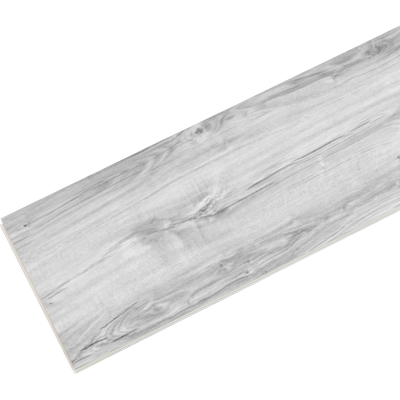
To meet the growing demand for increasingly realistic wood-look and stone-look LVT, manufacturing technology has undergone revolutionary changes. Traditional print films are now being supplemented and sometimes replaced by digital printing technologies. The latest "digital printed LVT" techniques allow for high-resolution designs to be printed directly onto the SPC core base. Coupled with digital embossing, which ensures precise alignment of texture with the printed pattern, these products achieve color clarity up to five times sharper than traditional film products and offer a remarkably authentic tactile experience.
On the manufacturing front, to boost efficiency and reduce costs, leading equipment manufacturers have developed in-line compounding production processes. These systems integrate mixing, calendering, and lamination into a single, continuous production line. This not only reduces energy consumption but also enhances the bonding strength of multi-layer LVT structures through precise process control.
Deep Dive into Technology: The Structure and Performance Advantages of LVT
A high-quality LVT plank is a synergy of its multi-layer construction, with each layer serving a specific function:
Wear Layer: This is the key determinant of product longevity. It consists of a clear PVC top coat, often enhanced with coatings like aluminum oxide for added scratch resistance. For international buyers, the thickness of the wear layer (typically ranging from 0.3mm to 0.7mm) is a critical specification. A thicker layer translates to superior resistance to scuffs, stains, and abrasion, which is essential for high-traffic commercial settings like hospitals and retail stores.
Design Layer: This is a high-definition printed film that delivers the realistic visuals of wood, stone, or concrete.
Core Layer: As discussed, this is the defining factor between rigid and flexible products. A high-quality SPC core requires precise control of the ratio between limestone and PVC (often with limestone content exceeding 60%) to ensure LVT dimensional stability and impact resistance.
Backing Layer: Often an attached underlayment, this layer provides acoustic insulation, reduces subfloor imperfections, and enhances comfort underfoot.
This unique structure confers several unparalleled advantages:
100% Waterproof: Unlike wood-based flooring, LVT will not swell or warp upon water exposure, making it safe for installation in bathrooms and kitchens.
Underfloor Heating Compatible: Its low thermal resistance ensures excellent heat transfer, making it an ideal companion for underfloor heating systems.
Ease of Installation: Advancements in click-lock technology have made installation glue-free and rapid, significantly reducing project timelines.
Supply Chain and International Trade: The New Normal Under Tariff Influence
International buyers formulating their 2026 procurement strategies must pay close attention to the evolving global trade landscape. Reports clearly indicate that tariff adjustments on imported PVC resins, plasticizers, and decorative films are impacting the production costs of LVT, particularly for rigid LVT (SPC/WPC) and adhesive-required flexible LVT.
This has led to two major trends:
Supply Chain Regionalization: To mitigate tariff risks, a growing number of manufacturers, especially in the US and Europe, are investing in domestic or nearshore LVT production lines, spurring the development of products like "Made in USA" LVT.
Innovation in Sustainable Formulations: Cost pressures are incentivizing manufacturers to develop more environmentally friendly and cost-effective formulations, reducing dependence on specific imported raw materials. This aligns perfectly with the global push for sustainable LVT flooring.
For importers, this means procurement decisions must now go beyond just unit price. Evaluating a supplier's raw material inventory stability, supply chain transparency, and capacity to navigate trade policy changes is equally, if not more, important.
Procurement Best Practices: Key Quality Control Points and Common Pitfalls
For B2B buyers aiming for long-term partnerships, building a stable supply chain is more critical than simply chasing the lowest price. Based on industry expertise, here are key considerations for the procurement process:
Color Consistency: Batch-to-batch color variation is a frequent source of complaints. Before production, it's essential to establish a sealed Approved Reference Sample as the manufacturing standard. Buyers should also require suppliers to maintain rigorous batch tracking records.
Locking System Strength: A failing click-lock system is one of the most challenging post-installation issues. Buyers should pay close attention to a supplier's ability to control extrusion tolerances and should request lock tensile strength test reports.
Lead Times: It's crucial to understand that quoted lead times (e.g., "25-35 days") typically begin only after order confirmation, sample approval, and packaging confirmation. Customized projects involving new embossing rollers or specific packaging requirements will invariably add extra days to the timeline.

FAQ: Common Questions from International Buyers
Q1: What exactly is the difference between LVT and SPC flooring?
A: LVT is the overarching category for Luxury Vinyl Tile. Traditional LVT is often flexible (Flexible LVT), whereas SPC (Stone Plastic Composite) is a type of rigid core LVT. SPC features an exceptionally hard and stable core made from limestone and stabilizers, offering superior impact resistance, dimensional stability, and lower thermal expansion/contraction. This makes SPC ideal for environments with fluctuating temperatures. Flexible LVT is thinner and typically requires glue for installation.
Q2: How do I choose the right wear layer thickness for my project?
A: This is a balance between performance and budget. For low-traffic residential areas like bedrooms, a 0.3mm wear layer is often sufficient. For medium-traffic areas like living rooms or dining areas, 0.5mm is recommended. For commercial spaces such as retail stores or busy offices, a wear layer of 0.7mm or greater is necessary to ensure a reasonable product lifespan.
Q3: As an importer, how can I ensure color consistency between my sample and a bulk order?
A: Prevention is key. First, contractually specify that the signed-off physical sample is the acceptance standard, not just a digital image. Second, request that the supplier provide in-line color inspection records during production. Finally, consider hiring a third-party inspection agency to conduct a pre-shipment inspection to mitigate the risk of receiving non-conforming goods.
Q4: Is LVT flooring environmentally friendly?
A: Yes, but it depends on the specific product. High-quality LVT products should meet strict Volatile Organic Compound (VOC) emission standards. Furthermore, many manufacturers are actively developing sustainable formulations, incorporating recycled content or bio-based plasticizers. Buyers should ask for international certifications such as FloorScore or Greenguard Gold to verify environmental claims.
Conclusion and Call to Action
In summary, the LVT flooring market in 2026 presents a landscape rich with opportunities, driven by technological upgrades and market expansion. The industry is becoming increasingly specialized, moving from flexible to rigid cores, from basic patterns to high-definition digital prints, and from commodity products to sustainable solutions. For the international buyer, success hinges not only on interpreting market data but also on gaining a deep understanding of product technology, supply chain dynamics, and the nuances of quality control.
Ready to secure a reliable LVT partner for your next project? Whether your focus is on high-durability SPC flooring for commercial applications or the superior comfort of WPC flooring for residential developments, we recommend engaging directly with manufacturers equipped with advanced digital printing capabilities and a stable, transparent supply chain.
To get started, contact our professional sales team today to request our latest product catalog or discuss your custom OEM requirements.