Commercial LVT: Custom Specs & Bulk Order Quality Control
Commercial LVT Built to Spec: Meeting Global Demand Through Customization and Rigorous Quality Assurance
In the evolving landscape of commercial interiors, Luxury Vinyl Tile (LVT) has transitioned from a cost-effective alternative to a specified material of choice for architects and procurement managers worldwide. For global buyers—including customization-focused procurement officers, import-export firms, and industry integrators—the modern commercial LVT market is no longer about off-the-shelf products. It is defined by customized specifications, the capacity to handle overseas bulk orders, and the implementation of a transparent quality control system. As construction and renovation cycles intensify across North America, Europe, and the Middle East, aligning product strategy with these procurement prerequisites is essential for successful market entry and expansion .
The Shift Toward Customization in Global Commercial LVT Procurement
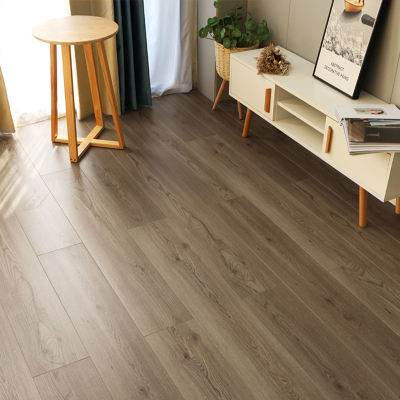
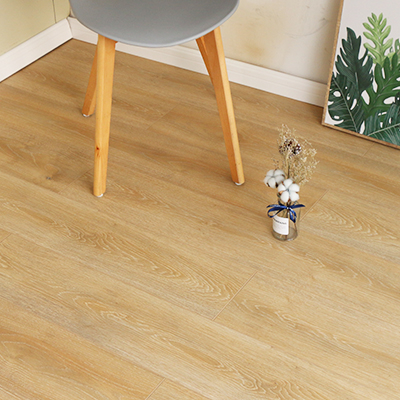
The demand for customized flooring solutions is being driven by a divergence in regional aesthetics and functional requirements. In mature markets such as North America and Europe, the trend leans heavily toward hyper-realistic aesthetics. Here, architects are seeking LVT that authentically replicates natural materials like oak, travertine, and slate, but with the added benefits of dimensional stability and acoustic performance . Digital printing technology has unlocked these possibilities, allowing for customized specifications that include bespoke colors, embossed-in-register textures, and varied plank lengths that break up the repetitive look of traditional printing .
Conversely, the Middle East and Asia-Pacific markets are exhibiting a surge in demand for technical customization. In these regions, extreme climate conditions necessitate products with enhanced thermal shock resistance and UV stability . Projects often require specific locking systems for floating installations or specialized loose-lay formats that accommodate high foot traffic without adhesive failure . For suppliers, this means the ability to modify core structures—be it Stone Plastic Composite (SPC) or Wood Plastic Composite (WPC)—and adjust wear layer thicknesses to meet specific project lifecycles is no longer a value-add but a baseline requirement for securing overseas bulk orders.
Engineering Customized Specifications: From Core to Surface
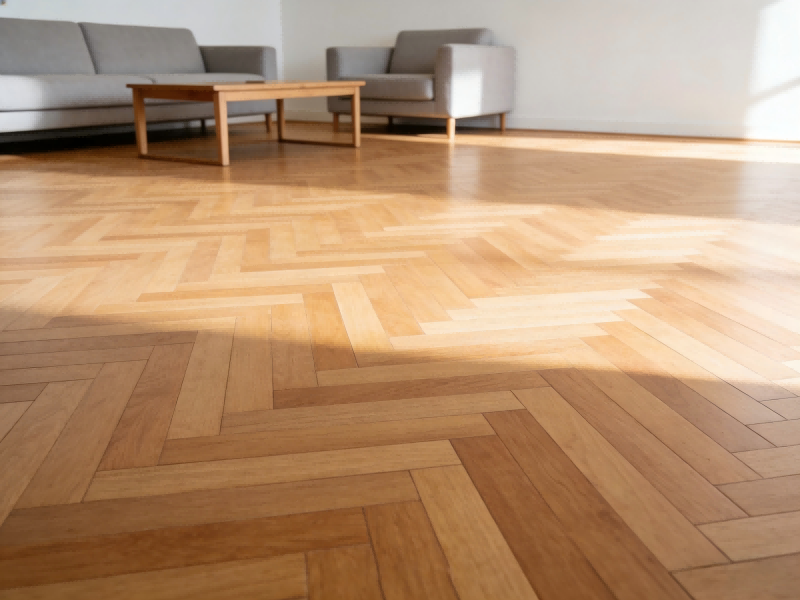
To effectively serve the commercial sector, manufacturers must demonstrate mastery over every layer of the LVT construction. The era of one-size-fits-all flooring is over. Today, a robust customized specifications strategy involves three critical intervention points:
1. Dimensional and Core Configuration
Commercial projects vary wildly in subfloor conditions and load requirements. A hotel corridor in Dubai requires different impact resistance than a retail space in London. Suppliers must offer flexibility in thickness tolerances (typically ±0.1mm) and core density. Rigid LVT options, including SPC and WPC, are frequently requested for their waterproof properties and stability in high-moisture environments . However, for renovation projects where subfloor leveling is challenging, flexible LVT with high-dimensional stability remains a preferred choice . The ability to toggle between click-lock, glue-down, and loose-lay back-end configurations within the same design family is a logistical advantage that speaks directly to the needs of international integrators .
2. Aesthetic and Tactile Personalization
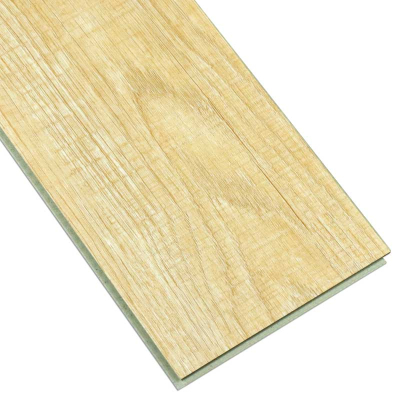
Surface design is the primary purchasing trigger. Through advanced rotogravure and digital printing, manufacturers can now offer customized specifications that align with corporate branding or regional color trends . This includes matching specific Pantone colors for wayfinding elements or creating proprietary wood grains exclusive to a client. The inclusion of extremely matte urethane coatings with ceramic beads is gaining traction in the commercial sector to reduce glare and enhance scratch resistance . For high-end hospitality, deeper embossing that mimics hand-scraped wood or chiseled stone is a critical differentiator.
3. Performance Additives
Commercial environments demand resilience. Customization extends to the wear layer, which can be scaled from 0.3mm for light commercial use to 0.7mm and above for heavy institutional traffic. Additionally, integrating acoustic underlayment for multi-story buildings or antimicrobial additives for healthcare settings transforms a standard LVT into a high-performance technical solution tailored to the end-user's operational needs .
The Anatomy of a Quality Control System for Overseas Bulk Orders
For importers and distributors, the greatest risk in placing overseas bulk orders lies in variance—inconsistency between the sample and the shipment. A reputable quality control system is the firewall against this risk. It must be structured, transparent, and verifiable.
A mature quality assurance framework begins pre-production. Suppliers should adhere to international management standards such as ISO 9001, and products must comply with regional safety regulations like CE marking (EN 14041) in Europe or ASTM standards in North America . With the increasing scrutiny on indoor environmental quality, certifications for low VOC emissions, such as FloorScore or GreenTag, are becoming mandatory for projects pursuing LEED or WELL certification .
The process should include:
Raw Material Inspection: Verifying the purity of PVC resins and plasticizers to ensure they are phthalate-free and compliant with REACH or RoHS regulations .
In-Process Monitoring: Checking digital print registration and core thickness during production to prevent defects.
Pre-Shipment Evaluation: Third-party inspections are standard practice. These inspections test for dimensional tolerance (expansion less than 0.5% after water immersion), lock integrity, and slip resistance (DIN 51130 ratings) .
A rigorous quality control system not only mitigates returns and claims but also builds the trust necessary for long-term partnerships in the competitive global flooring market.
FAQ: Addressing Buyer Concerns on Customization and Logistics
To provide clarity for procurement and supply chain managers, here are answers to the most frequent inquiries regarding the customization and delivery of commercial LVT.
Q: What specific aspects of LVT can be customized for a large-scale hotel or retail project?
A: Customization options are extensive. They typically include the core substrate (SPC, WPC, or flexible), plank dimensions (width/length), surface design (color, pattern, gloss level), texture (embossing depth), and wear layer thickness. Many suppliers also offer OEM services for branded packaging and custom imprinting on the tile backing .
Q: How do I verify the quality of LVT before committing to an overseas bulk order?
A: Verification is a multi-step process. First, request batch-specific test reports for fire rating, slip resistance, and dimensional stability. Second, conduct a pre-audit of the factory via video walkthroughs. Third, obtain physical samples and test them against your project's specific requirements. Finally, mandate a third-party pre-shipment inspection to ensure the bulk goods match the approved sample's quality .
Q: What are typical minimum order quantities (MOQs) for customized LVT products?
A: MOQs vary depending on the complexity of the customization. Standard colors and designs may have lower MOQs (e.g., 300-500 sqm), while fully bespoke designs with custom digital prints or proprietary colors often require higher volumes, typically starting from 1,000 sqm per design. Some suppliers offer lower MOQs for sample orders or stock-keeping units to facilitate project trials .
Q: What kind of after-sales support or warranty can be expected for cross-border transactions?
A: Reputable manufacturers provide product warranties ranging from 10 to 25 years, covering manufacturing defects such as delamination or wear layer failure . Additionally, look for suppliers offering a clear claims process and technical support for installation. Some advanced sustainability programs even include product take-back schemes at the end of the product's life cycle .
Conclusion: Building Partnerships Through Precision and Transparency
The trajectory of the global commercial LVT market is clear: growth is fueled by the ability to deliver precision. For customization-focused buyers, success lies in partnering with manufacturers who treat customized specifications not as a rare exception but as a standard operating procedure. By integrating a responsive quality control system and streamlining logistics for overseas bulk orders, suppliers become indispensable partners in the value chain.
Whether you are specifying flooring for a mixed-use development in Singapore, a corporate headquarters in Germany, or a retail chain in the United States, the ability to tailor every aspect of the product—from its core chemistry to its surface finish—ensures that the final installation performs exactly as envisioned.
Transform Your Project Vision into Reality
Don't settle for standard when your project demands distinctive. Contact our technical sales team today to discuss your specific requirements. We will connect you with our product engineers to develop a sampling plan tailored to your customized specifications, provide a competitive quote for your overseas bulk orders, and share our quality control system documentation.