The Strategic Choice for Global B2B Flooring Procurement
Engineered Hardwood: The Strategic Choice for Global B2B Flooring Procurement
In the international market for high-performance flooring, engineered hardwood has firmly established itself as a premier category. For B2B buyers—including importers, distributors, project developers, and large-scale contractors—understanding this product is key to making informed, profitable sourcing decisions. This comprehensive guide delves into the composition, market drivers, and technical advantages of engineered hardwood, providing the insights necessary for successful procurement in a competitive global landscape.
Industry Evolution and Current Market Position
The global flooring industry has undergone a significant transformation, driven by demands for sustainability, dimensional stability, and cost-efficiency without compromising aesthetics. Engineered hardwood flooring emerged as a sophisticated response to these demands. Unlike solid hardwood, its multi-layered construction solves perennial issues such as susceptibility to moisture and temperature-induced expansion and contraction.
Current market analysis indicates sustained growth in the engineered wood flooring segment. It is increasingly favored in both residential and large-scale commercial projects, such as hospitality, office spaces, and multi-unit developments. The product’s versatility, coupled with responsible forestry practices, aligns with global green building standards, making it a future-proof choice for environmentally conscious projects.
Deconstructing the Technology: Why Engineered Hardwood Performs
At its core, the superiority of engineered hardwood floors lies in their innovative cross-ply construction. This design is the fundamental answer to performance challenges in diverse climates.
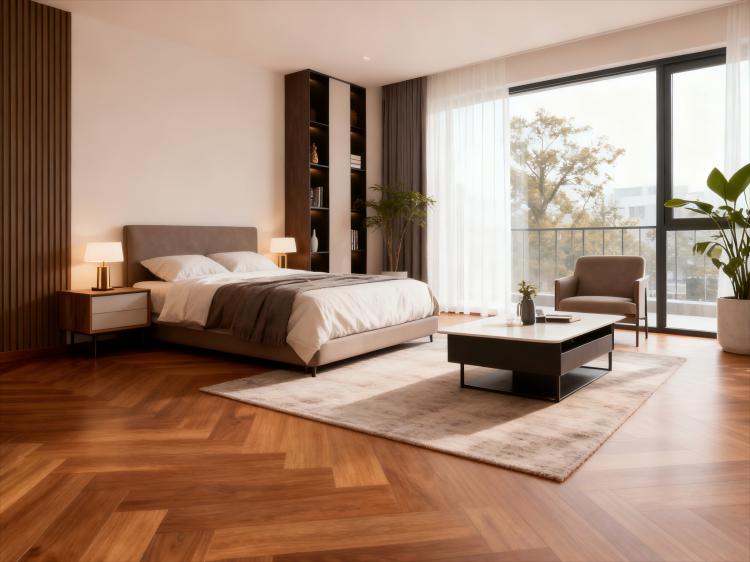
The Multi-Layer Cross-Ply Structure
A typical engineered hardwood board consists of three to nine layers. The top layer is a veneer of genuine, premium-quality hardwood, determining the floor’s final appearance and wear characteristics. Beneath this wear layer are multiple core layers of cross-stacked plywood, softwood, or High-Density Fiberboard (HDF). These layers are bonded at 90-degree angles to each other. This cross-graining technique effectively counteracts the natural tendency of wood to expand and contract, granting exceptional dimensional stability.
Advanced Manufacturing and Finishing
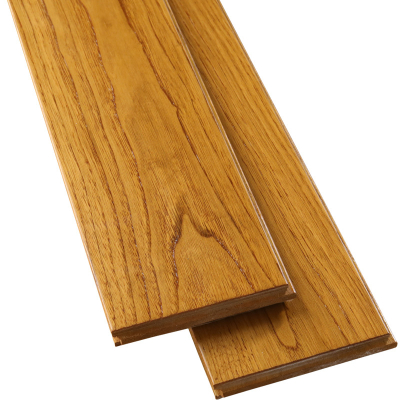
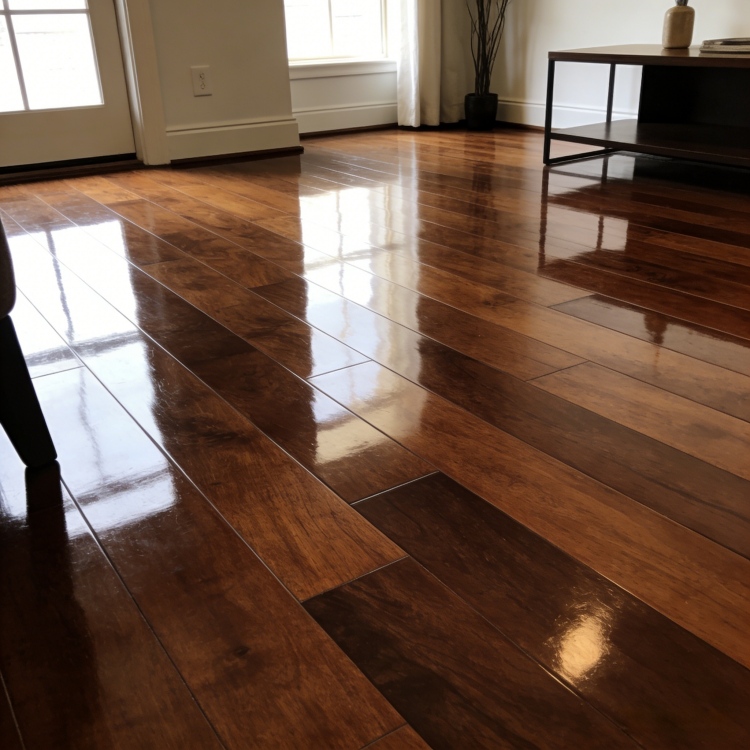
The manufacturing process involves precision engineering. After layer assembly under high heat and pressure, the boards are milled with precision tongue-and-groove systems for seamless installation. Modern factory-applied finishes, such as UV-cured aluminum oxide or ceramic bead coatings, provide a highly durable surface that is scratch, stain, and fade-resistant far beyond traditional site-applied finishes. This results in a low-maintenance flooring solution for commercial projects with high foot traffic.

Key Market Trends Influencing B2B Purchasing Decisions
International buyers must navigate several prevailing trends shaping the engineered hardwood market.
Demand for Stable, Wide-Plank Formats: There is a growing preference for wide and long plank designs, which offer a modern, spacious aesthetic. The inherent stability of engineered wood flooring makes it the only viable option for these formats, preventing the warping common in solid wide planks.
Sustainability as a Prerequisite: B2B buyers are increasingly mandated to source products with verifiable green credentials. Engineered hardwood utilizes far less old-growth hardwood per square foot than solid wood, making efficient use of valuable timber resources. Certifications from organizations like the Forest Stewardship Council (FSC) are becoming critical differentiators.
Innovation in Surface Textures and Finishes: The market shows strong demand for authentic, hand-scraped, wire-brushed, and matte finishes that enhance character and hide minor wear. This allows engineered hardwood to cater to both traditional and contemporary design specifications.
Compatibility with Underfloor Heating Systems: In many global markets, underfloor heating is standard. The structural stability of engineered hardwood flooring makes it the recommended wood flooring choice for such applications, a significant advantage over solid hardwood.
FAQ: Addressing Common Buyer Inquiries
Q1: How does the durability of engineered hardwood compare to solid hardwood for commercial use?
A: For commercial applications, engineered hardwood often offers superior practical durability. Its premium factory-applied finish is tougher than most site-applied finishes. Additionally, its stability minimizes gaps and movement, ensuring long-term performance. Many products are rated for heavy commercial use.
Q2: Can engineered hardwood be sanded and refinished like solid wood?
A: Yes, a key quality differentiator is the thickness of the top wear layer. High-grade engineered wood flooring features a thick wear layer (3mm to 6mm+) that can be sanded and refinished multiple times over its lifespan, similar to solid wood. Buyers should always specify wear layer thickness based on the project's long-term maintenance plans.
Q3: What are the primary installation methods, and how do they impact project timelines?
A: Engineered hardwood floors offer versatile installation: glue-down, nail/staple-down, or floating (click-lock) systems. Click-lock systems enable faster, tool-light installation, significantly reducing labor time and cost, which is ideal for large projects with tight schedules. The choice depends on subfloor conditions and performance requirements.
Q4: What certifications should I look for to ensure quality and sustainability?
A: Key certifications include:
* FSC/PEFC: For responsible wood sourcing.
* CARB Phase 2 / EPA TSCA Title VI (for US): For low formaldehyde emissions.
* ISO 9001: For quality management in manufacturing.
* Regional Flooring Performance Standards (e.g., EN in Europe).
A Call to Action for Discerning B2B Buyers
The engineered hardwood market presents a compelling blend of aesthetic appeal, technical resilience, and environmental responsibility. For B2B buyers, the opportunity lies in sourcing from manufacturers who combine advanced engineering with consistent quality control and transparent supply chains.