Global SPC Flooring Market 2026: Trends & B2B Insights
Global SPC Flooring Market 2026: Unmatched Durability Reshaping Commercial & Residential Spaces
SPC Flooring Market Analysis 2026: Why Rigid Core Dominates the Global Stage
The global flooring industry is undergoing a significant transformation, driven by the demand for high-performance, sustainable, and aesthetically versatile materials. Among the most disruptive segments is SPC flooring (Stone Plastic Composite), which has moved from a niche alternative to a mainstream preference for architects, contractors, and property developers. Recent market intelligence indicates that the global Stone Plastic Composite (SPC) flooring market is not just growing; it is fundamentally redefining expectations for durability and waterproofing in the building materials sector.
As we move through 2026, this article provides a deep dive into the latest market statistics, technological advancements in rigid core manufacturing, and the key trends that international B2B buyers must consider to stay competitive.
Market Overview & Robust Growth Projections
The numbers underscore a period of explosive expansion for the rigid core sector. According to comprehensive market research, the global Stone Plastic Composite (SPC) flooring market was valued at approximately US$ 4.28 billion in 2025. With increasing adoption in both residential and commercial applications, this figure is projected to surge, with some reports estimating the broader SPC category to approach US$ 30.84 billion by 2032 .
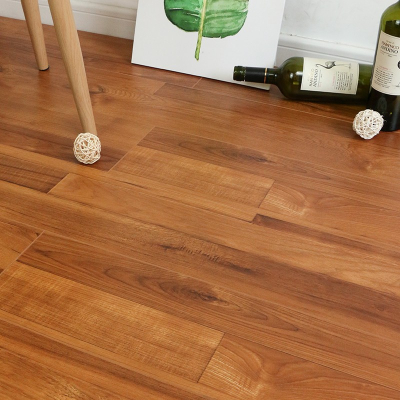
This growth, representing a robust Compound Annual Growth Rate (CAGR) of over 6% through the forecast period of 2026 to 2032, is fueled by a significant shift in buyer preference. Unlike traditional flooring, SPC vinyl flooring offers a unique value proposition: the visual warmth of hardwood or stone combined with the engineering resilience required for high-traffic environments.
SPC Flooring vs. Alternatives: The "Rigid Core" Advantage
To understand the market penetration of SPC, one must look at the composition. SPC is often referred to as "Rigid Core" flooring. It is distinct from standard Vinyl and WPC.
Technical Composition and Structure
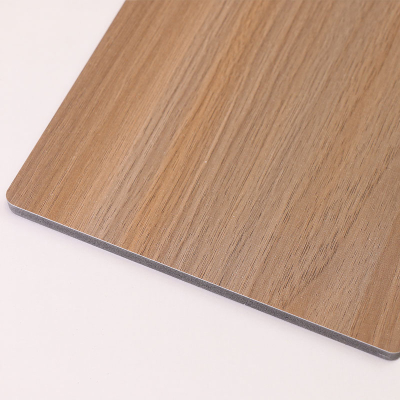
SPC flooring is a multi-layer product engineered for stability. The core comprises a blend of limestone powder (calcium carbonate) and polyvinyl chloride (PVC) . Unlike WPC (Wood Plastic Composite), which uses a foamed wood fiber core, SPC features a dense composite that is approximately 60% to 70% limestone .
The typical structure includes:
UV Coating: Provides stain resistance and protects against discoloration.
Wear Layer: Transparent layer determining the floor's durability (measured in mil or mm).
Decorative Film: High-resolution print layer mimicking wood, stone, or tile.
SPC Rigid Core: The waterproof and stabilizing heart of the plank.
Attached Underlayment (IXPE): Provides acoustic insulation and minor subfloor forgiveness .
Performance Benchmarks
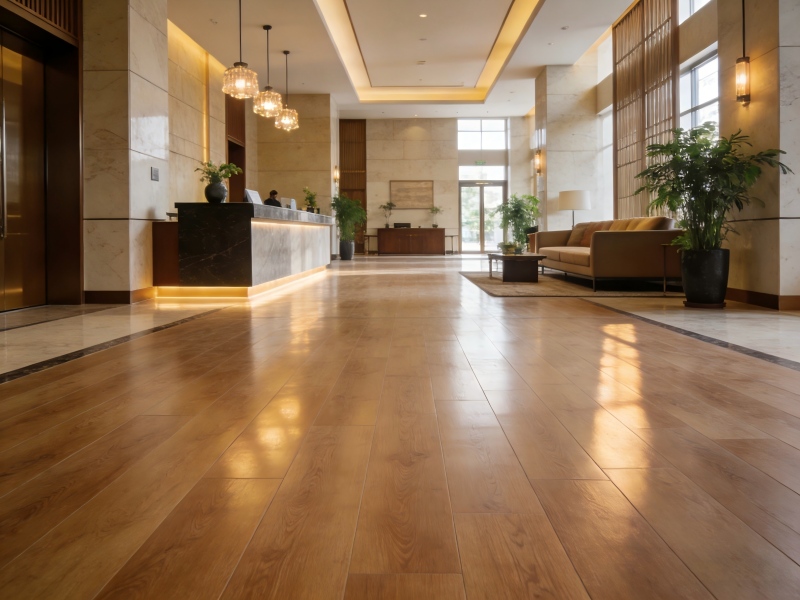
For B2B buyers sourcing for hospitality, healthcare, or multifamily housing projects, the performance metrics of rigid core SPC flooring are particularly attractive. It is reported to be 10 times more impact resistant than traditional WPC . Its dimensional stability ensures it performs exceptionally well in environments with extreme temperature fluctuations and direct sunlight, resisting expansion and contraction better than laminate or engineered wood .
2026 Market Trends Shaping the Industry
As the market evolves, several key trends are emerging that buyers should monitor closely to align their supply chains with end-user demand.
Sustainability and Eco-Certifications
Sustainability is no longer a secondary concern; it is a procurement prerequisite. Leading international buyers are increasingly requiring products that meet stringent indoor air quality standards.
Low Emissions: Modern SPC flooring products are manufactured to be formaldehyde-free and comply with certifications like FloorScore and GREENGUARD. Manufacturers are focusing on low VOC (Volatile Organic Compound) emissions to ensure healthy indoor environments .
Recyclability: There is a growing trend toward take-back programs and the use of recycled PVC content. The market is segmented into Recycled PVC and Non-recycled PVC types, with the latter currently dominating due to purity standards, though demand for circular economy solutions is rising .
Aesthetic Diversification
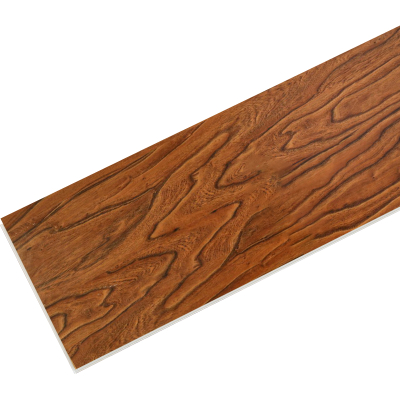
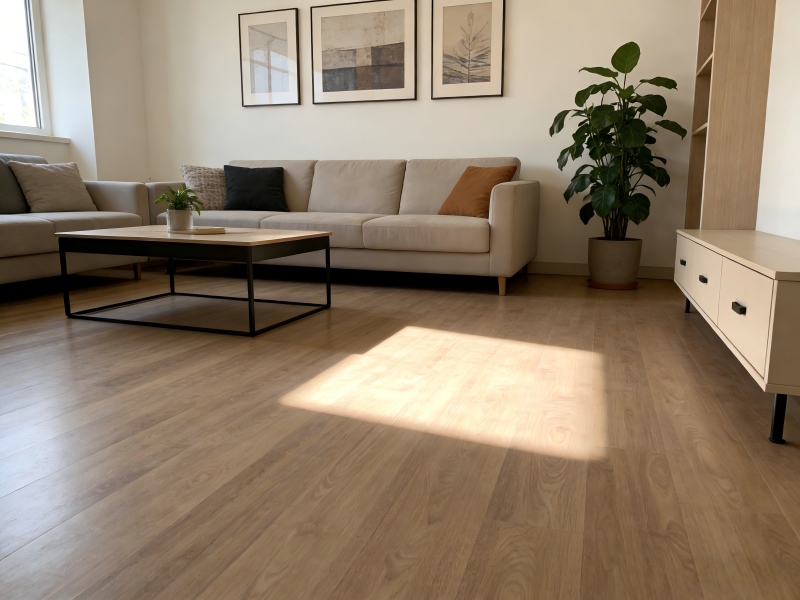
While durability sells, design closes the deal. The latest SPC click flooring collections now feature deeper embossing, hand-scraped textures, and herringbone patterns. The ability to precisely replicate high-end materials allows architects to specify SPC in luxury boutiques and upscale residences without sacrificing the "wow" factor .

Commercial Sector Penetration
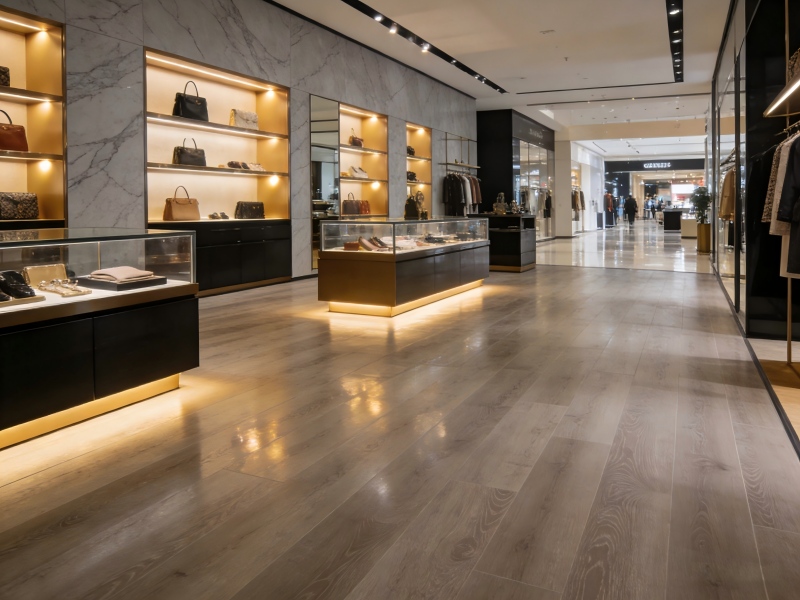
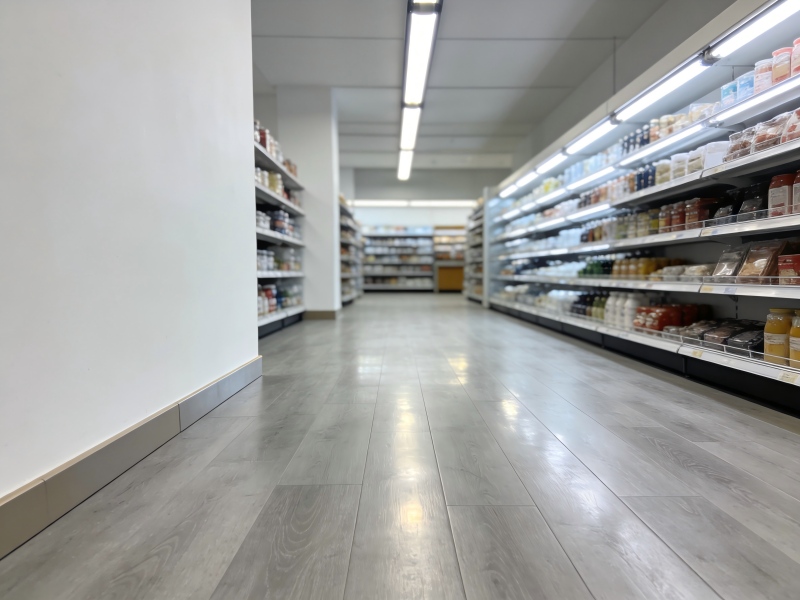
Historically dominated by residential use, the commercial application segment for waterproof SPC flooring is accelerating. Its slip-resistant coating and ability to withstand heavy foot traffic make it ideal for retail stores, offices, and educational facilities. The demand for prefabricated and modular construction further boosts SPC, as its ease of installation reduces labor costs on commercial sites .
Insights into the Production Process
For the discerning B2B buyer, understanding the manufacturing process is key to assessing quality. The production of high-quality SPC flooring involves precision engineering.
The process typically begins with the automatic dosing and mixing of raw materials (PVC, limestone powder, stabilizers). This mixture is then fed into a twin-screw extruder. Using heat and pressure, the compound is formed into a rigid core board.
In a continuous process, the decorative film and wear layer are laminated onto the core while it is still hot, ensuring a permanent bond without the need for additional glues. The plank then passes through cooling tanks and sizing machines before the click-lock profile is milled into the edges. Finally, a UV-cured coating is applied, and robotic systems handle packaging to ensure the product arrives at its international destination in perfect condition .
Frequently Asked Questions (FAQ) for B2B Buyers
Q1: What is the typical lead time for bulk SPC flooring orders from overseas suppliers?
Most established manufacturers operate on a production schedule of approximately 15 to 30 days after order confirmation, depending on volume and customization (OEM/ODM). Shipping times vary by region, but efficient suppliers often have robust logistics networks to streamline delivery to North American or European ports .
Q2: How does SPC flooring perform with underfloor heating systems?
Yes, SPC flooring is highly suitable for underfloor heating. Its dense composition allows for excellent thermal conductivity, meaning heat transfers efficiently through the planks. However, it is crucial to follow the manufacturer's guidelines regarding maximum temperature limits (usually around 27°C) to prevent long-term distortion .
Q3: What wear layer thickness should I specify for a commercial hotel project?
For heavy commercial use, such as hotel lobbies or corridors, a wear layer of 0.5mm or higher is recommended. For standard residential use or light commercial (like boutiques), a 0.3mm wear layer is often sufficient. Always balance the traffic expectations with the warranty period .
Q4: Can SPC flooring be installed in areas with uneven subfloors?
While SPC is rigid, it requires a clean, level, and dry subfloor for proper installation. The floating click-lock system can tolerate minor imperfections, but significant dips or peaks must be leveled prior to installation to prevent plank separation or "tenting." The attached IXPE underlayment helps with minor sound deadening but is not a substitute for proper subfloor preparation .
Conclusion: The Future is Rigid
The data is clear: the global appetite for SPC flooring shows no signs of slowing down. As we progress through 2026, the product's inherent advantages—100% waterproof construction, superior dent resistance, and stylistic versatility—make it the optimal choice for specifiers worldwide. For importers and distributors, aligning with manufacturers who prioritize stringent quality control, sustainability certifications, and consistent supply chains will be the key to capitalizing on this growing market segment.