Engineered Hardwood: Smart B2B Sourcing for Value & Quality
Sustainable Sourcing: How Cheap Engineered Flooring Is Leading the Green Building Revolution
For international B2B buyers, the term cheap engineered flooring has traditionally been associated with trade-offs—lower cost often perceived as a compromise on environmental standards or long-term reliability. However, the industry has undergone a fundamental shift. Driven by stricter global regulations, evolving consumer preferences, and advancements in manufacturing, cheap engineered flooring now stands at the forefront of sustainable construction. Today, affordability and environmental responsibility are no longer mutually exclusive. This article explores how innovative production methods, certified material sourcing, and supply chain transparency are enabling buyers to meet both budget targets and green building requirements.
Global Market Context: The Sustainability Imperative
The global flooring industry is experiencing a regulatory and market-driven transformation. In North America and Europe, building codes increasingly mandate low-emission materials, while carbon border adjustment mechanisms are pushing importers to evaluate the environmental footprint of their supply chains. Against this backdrop, demand for cheap engineered flooring that meets rigorous sustainability criteria has surged.
Market analysis indicates that the eco-friendly flooring segment is growing at a compound annual growth rate (CAGR) of nearly 7%, outpacing conventional flooring categories. Within this segment, engineered wood products—particularly those positioned as cheap engineered flooring—have gained significant traction. Manufacturers in key exporting regions, including Southeast Asia and Eastern Europe, have invested heavily in green production technologies to capture this demand. For B2B buyers, this means a growing pool of suppliers capable of delivering cost-effective flooring without compromising on environmental compliance.
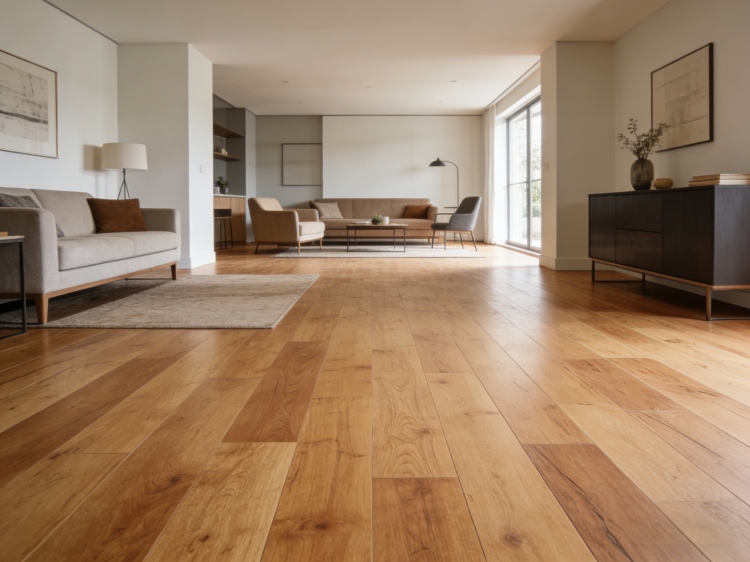
Manufacturing Innovation: Green Technology in Affordable Flooring
The perception that cheap engineered flooring cannot be truly sustainable is outdated. Advanced manufacturing techniques now allow producers to minimize waste, reduce energy consumption, and utilize renewable materials while maintaining competitive pricing.
Low-Emission Core Materials
A critical component of sustainable cheap engineered flooring is the core board. Traditional fiberboard often relied on urea-formaldehyde adhesives. Today, leading manufacturers use formaldehyde-free binders and isocyanate-based adhesives that meet CARB Phase 2 and TSCA Title VI standards. Some have transitioned to using agricultural byproducts—such as straw or bagasse—in the core layer, further reducing reliance on virgin wood fibers while keeping production costs low.
Closed-Loop Manufacturing Systems
Efficiency in material utilization directly impacts both cost and sustainability. Modern production lines for cheap engineered flooring employ computerized optimization software that maximizes yield from each log. Wood veneer slicing generates minimal waste, and residual materials are often captured and used as biomass fuel for factory operations. This closed-loop approach reduces energy costs and allows manufacturers to offer cheap engineered flooring with a significantly lower carbon footprint compared to conventional methods.
Water-Based Finishes and Digital Printing
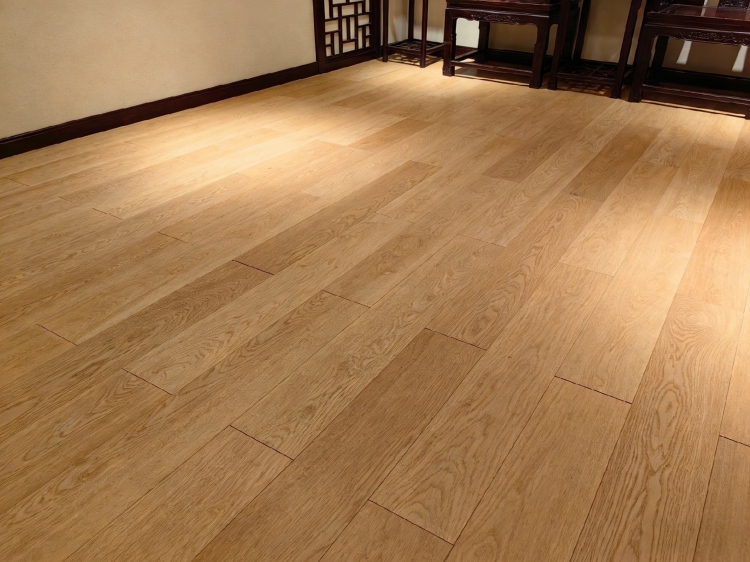
Surface finishing has also evolved. Water-based polyurethane and UV-cured coatings have replaced solvent-based alternatives, eliminating volatile organic compound (VOC) emissions during application. For products utilizing digital printing to replicate rare wood species, the process requires less intensive forestry while delivering aesthetic consistency. This technological shift enables cheap engineered flooring to achieve premium visual appeal without the environmental toll associated with harvesting exotic timbers.
Key Trends: Transparency, Certifications, and Circularity
Three major trends are shaping the future of sustainable cheap engineered flooring: supply chain transparency, third-party certifications, and end-of-life recyclability.
Traceability from Forest to Factory
B2B buyers increasingly demand visibility into raw material origins. Suppliers of cheap engineered flooring are responding by implementing chain-of-custody certifications such as FSC or PEFC. Digital tracking systems allow buyers to verify that wood fibers come from responsibly managed forests. This transparency not only mitigates regulatory risk but also strengthens the credibility of projects targeting green building certifications like LEED, BREEAM, or WELL.
Circular Economy Initiatives
The concept of circularity is gaining traction. Some manufacturers now design cheap engineered flooring with reversible core layers or click-lock systems that facilitate easy disassembly and reuse. Additionally, take-back programs are emerging, where suppliers accept end-of-life flooring for recycling into new core boards or alternative products. For large-scale developers, these programs contribute to waste reduction targets and demonstrate a commitment to long-term environmental stewardship.
Application Scenarios: Where Sustainable Affordable Flooring Excels
Sustainable cheap engineered flooring is well-suited to a range of B2B projects where both budget and environmental performance are prioritized.
Green Residential Developments: Developers of eco-conscious housing projects increasingly specify cheap engineered flooring that carries low-VOC certifications and sustainable sourcing credentials. The dimensional stability of engineered construction also makes it compatible with energy-efficient radiant heating systems.
Commercial Interiors with ESG Goals: Corporate offices, retail chains, and hospitality brands are under pressure to meet environmental, social, and governance (ESG) targets. Specifying cheap engineered flooring with verified green credentials allows these businesses to align interior finishes with broader sustainability commitments.
Public Sector and Institutional Projects: Government-funded housing, schools, and healthcare facilities often operate under strict procurement guidelines that require both cost efficiency and environmental compliance. Certified cheap engineered flooring offers a reliable solution that satisfies public tender requirements.
Strategic Sourcing: Evaluating Suppliers for Sustainability
For procurement professionals, selecting the right partner for cheap engineered flooring goes beyond price negotiation. A supplier’s environmental credentials should be verifiable through documentation. Key indicators include FSC or PEFC chain-of-custody certificates, third-party VOC test reports, and ISO 14001 environmental management certification. Additionally, suppliers that provide detailed product declarations—such as Environmental Product Declarations (EPDs)—demonstrate a level of transparency that supports buyers’ own sustainability reporting. Engaging with manufacturers who prioritize energy-efficient production and waste reduction ensures that the cheap engineered flooring you source contributes positively to your project’s environmental profile.
Frequently Asked Questions (FAQ)
Q1: Can cheap engineered flooring meet strict environmental certification standards like LEED?
A1: Yes, many cheap engineered flooring products are designed to contribute to LEED credits. Look for products with low-VOC emissions (verified by FloorScore or Greenguard Gold), FSC-certified wood content, and regional manufacturing to reduce transportation impacts. Reputable suppliers provide the necessary documentation to support certification applications.
Q2: What is the typical lead time for sustainably certified cheap engineered flooring?
A2: Lead times vary depending on the complexity of certification requirements and order volume. For standard cheap engineered flooring with existing FSC or low-VOC certifications, lead times typically range from 25 to 35 days for container orders. Custom certifications or specialized core materials may extend lead times by 10 to 15 days. We recommend discussing your certification needs early in the procurement process.
Q3: Are there minimum order quantities for products with specific green certifications?
A3: For cheap engineered flooring that carries standard certifications such as FSC or CARB Phase 2, the MOQ is generally 500 to 800 square meters. If you require custom-certified products, such as those with unique chain-of-custody requirements or specialized low-emission cores, the MOQ may range from 2,000 to 3,000 square meters. We offer flexibility for buyers conducting initial qualification orders.
Q4: How can I verify the sustainability claims of a cheap engineered flooring supplier?
A4: Verification should be based on documented evidence. Request copies of FSC/PEFC certificates, test reports from accredited laboratories (e.g., SGS, TÜV), and ISO 14001 certification. For larger projects, you may also ask for a factory audit to observe waste management, energy use, and material handling practices. Reliable suppliers of cheap engineered flooring will readily share this information as part of their quality and sustainability commitments.
Conclusion and Call to Action
The convergence of cost sensitivity and environmental responsibility has redefined what B2B buyers can expect from cheap engineered flooring. With advanced manufacturing techniques, robust certification frameworks, and a growing emphasis on supply chain transparency, affordable flooring no longer requires compromises on sustainability. By partnering with forward-thinking manufacturers, you can achieve your project’s budgetary goals while contributing to a lower-carbon built environment.
If you are sourcing for a green building project, a commercial development with ESG targets, or simply seeking reliable cheap engineered flooring backed by verifiable environmental credentials, our team is ready to support you. Contact us today to request sustainability documentation, discuss certification requirements, or receive a tailored quotation for your next procurement cycle.