Does SPC possess advantages over hardwood?
Chapter One: Essence and Structure - The Root Differences between Synthesis and Nature
1.Solid wood flooring
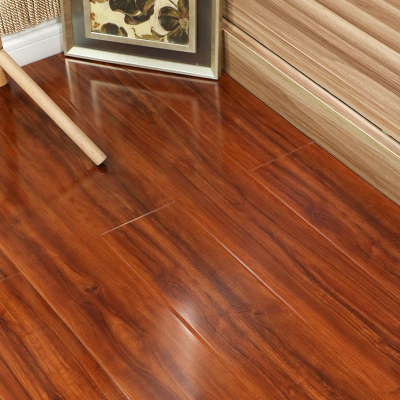
Solid wood flooring is made by cutting, drying and processing single trees such as oak, maple, walnut and hickory. It is a 100% natural organic material.
Structure: Anisotropy. Its properties (such as expansion, contraction and hardness) will change along the direction of the wood grain. This inherent "vitality" is the source of its aesthetic appeal and also the root cause of its usage challenges.
Type:
Solid wood flooring: A single piece of wood, usually 3/4 inch thick. It can be polished and refurbished multiple times.
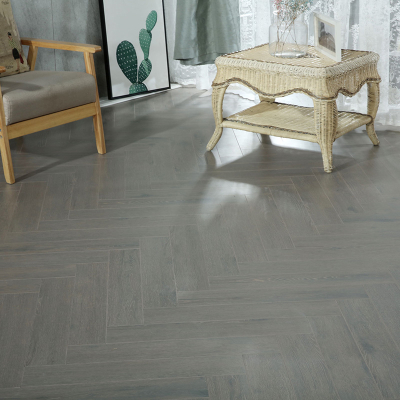
Engineered solid wood flooring: The top layer is solid wood veneer (usually 2-6 millimeters thick), and the bottom layer is multiple layers of cross-laminated plywood. Its stability is superior to that of solid wood, and some products can also be refurbished a limited number of times.
2. SPC flooring
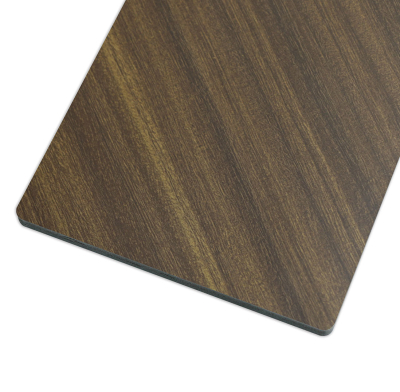
SPC is a high-end category in laminate flooring and belongs to rigid core flooring. It is a completely synthetic engineering product.
Structure: Isotropic. Its performance is uniform in all directions, which endows it with extraordinary dimensional stability. Its typical structure from top to bottom is:
Wear-resistant layer: Transparent polyurethane layer, which determines the floor's scratch resistance and stain resistance.
Decorative layer: High-resolution photographic images, precisely imitating the textures of wood, stone, etc.
Core layer: Stone-plastic composite material. It is extruded from limestone powder (calcium carbonate), polyvinyl chloride and stabilizers under high temperature and high pressure, and is extremely dense.
Bottom layer: Usually equipped with cork or IXPE soundproof pads to enhance foot feel, sound insulation and cushioning.
Professional Insight: This fundamental difference determines all subsequent performance comparisons. Solid wood is a living material that "breathes", constantly interacting with the environment. SPC, on the other hand, is an inert product designed to resist environmental impacts.
Chapter Two: Performance Showdown - The Collision of Pragmatism and the Laws of Nature
1. Durability and damage resistance
Winner: SPC (with overwhelming advantages in scratch resistance, dent resistance and water resistance)
Scratches and dents: The ultra-high density core and high-quality wear-resistant layer of SPC (household grade is usually 12-30 mil) make it highly resistant to pet nails, high heels, furniture movement, etc. Its wear resistance grade usually reaches AC4 (for heavy-duty household use) or AC5 (for commercial use), meaning it can withstand high-traffic environments such as shopping malls and offices. Although solid wood flooring has hardness ratings (such as Janka hardness), it is still made of natural fibers and is prone to being scratched by sharp objects or dented by heavy objects.
Waterproof and moisture-proof: This is the "ace" of SPC. It is 100% waterproof. This means that it can be installed in any damp environment such as bathrooms, kitchens, basements, laundry rooms, etc., and can even be directly installed on a concrete base. In the event of an accident such as a pipe burst, the floor can usually be removed, dried and reinstalled without being damaged. Solid wood flooring is a hygroscopic material that can absorb moisture from the air. Prolonged contact with moisture or a damp base layer can cause it to expand, warp, become warped or mold. Even engineered solid wood has a much lower durability than SPC.
2. Aesthetics and sensory experience
Winner: Solid wood flooring (the undisputed king)
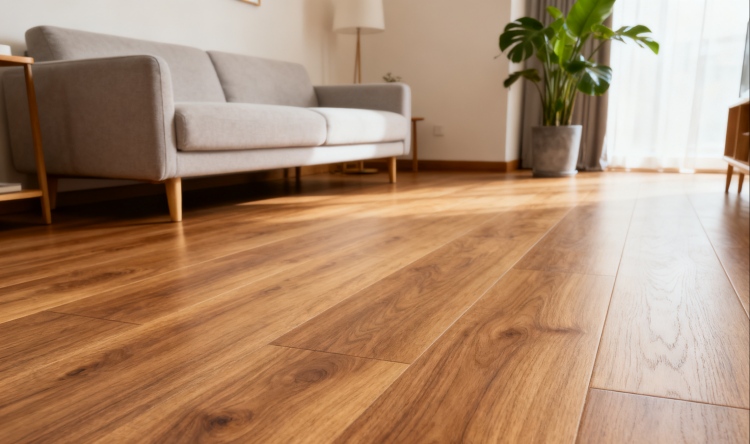
Vision and touch: No artificial product can fully replicate the three-dimensional texture of solid wood, the random changes of natural grain, and the warm luster that accumulates over time. Each solid wood board is unique and has its own "life story". The warmth and slight elasticity of walking barefoot on solid wood are hard for SPC to compare with. The texture of SPC is derived from printing technology. Although high-end products can already achieve very realistic surface treatments such as "hand-scratch patterns", the repetitive patterns and lack of depth in texture are still recognizable in the eyes of professionals and consumers who pay attention to details.
Design value and preservation of value: Solid wood flooring has long been regarded by the real estate industry as one of the top elements for enhancing property value. It conveys a sense of eternity, luxury and quality. SPC is regarded as a smart and practical choice, but when it comes to reselling real estate, its value-added effect is far less than that of solid wood.
3. Comfort and indoor environment
Winner: Solid wood flooring (superior in natural comfort)
Foot feel: Solid wood (especially engineered solid wood) has a certain degree of natural elasticity, making it more comfortable to stand for a long time. The core of SPC is very hard and feels rather stiff underfoot. In Spaces where one needs to stand for a long time, such as the kitchen, it may easily cause fatigue (which can be relieved by high-quality floor MATS).
Temperature: Solid wood is a natural heat insulator and feels moderately warm. SPC tends to maintain the ambient temperature and feels cooler in winter.
Acoustics: The sound of directly installed solid wood flooring is firm. If the SPC flooring installed in a floating manner does not have high-quality floor MATS, it will produce hollow echoes. However, SPC with pre-attached advanced floor MATS can perform extremely well in terms of sound insulation.
4. Installation and Applicability
Winner: SPC (more flexible in terms of convenience and applicable scenarios)
Installation method: SPC generally adopts the "floating" lock installation method, which does not require glue or nails and is extremely friendly to DIY enthusiasts, with a fast installation speed. Solid wood flooring (especially solid wood) usually requires nailing or gluing, has high requirements for the base layer, and needs a professional installation team and tools.
Applicable scenarios: SPC can be installed on almost any flat base (including existing tiles and vinyl), and is suitable for any room in the entire house, including basements. Solid wood flooring should not be installed in damp areas such as basements. It is also not recommended to install solid wood flooring on concrete substrates unless there is very thorough moisture-proof treatment.
5. Long-term maintenance and life cycle
Draw and division
Daily cleaning: Both are very easy to maintain. Just vacuum and use a slightly damp mop.
Restoration and renovation: This is the key difference. The core advantage of solid wood flooring (especially solid wood) lies in its returnability. A high-quality solid wood floor can be sanded and repainted 3 to 5 times during its life cycle (up to 100 years). This means you can completely eliminate the wear and tear caused by decades of use, and even change the color style. Once the wear-resistant layer of SPC flooring is severely scratched or its surface is damaged, it cannot be repaired on site and can only be replaced. Its service life is usually 15 to 25 years.
6. Cost analysis
The winner: It depends on the time dimension
Upfront cost: The purchase and installation costs of entry-level and intermediate SPC are usually lower than those of solid wood flooring. However, the price of high-end SPC may overlap with that of mid-range engineered solid wood. Solid wood (especially rare tree species) has always been a high-end product.
Life cycle cost: This is a key concept. Although the initial investment in solid wood is high, its recyclable feature means that it may be a "one-time investment, lifelong enjoyment" product. As a consumable, SPC may need to be replaced 2 to 3 times during the 50-70 year lifespan of a house. In the long run, its total cost may exceed that of solid wood.
7. Environmental Protection and Health
The situation is complex and requires specific analysis
Solid wood: Derived from renewable resources (provided that sustainable forestry products certified by FSC and others are chosen), it is a natural carbon reservoir. However, its production involves logging, transportation and processing, leaving an environmental footprint. High-quality solid wood flooring hardly releases VOCs (volatile organic compounds).
SPC: Its core component includes PVC, and its production and recycling treatment are controversial in the environmental protection field. However, modern high-quality SPC brands all strictly adhere to strict indoor air quality standards (such as FloorScore certification), and their VOC emissions are extremely low. Its utilization of limestone, a rich resource, also reduces its reliance on trees.
Chapter Three: Decision-making Guide - How to Make the Right Choice for Your Situation
Please choose SPC without hesitation in the following circumstances:
The priority is 100% waterproof and moisture-proof: suitable for bathrooms, basements, kitchens or areas with a humid climate.
Active family life: with children, large pets, scratches and spills are common occurrences.
Pursuing easy installation and low cost: Planning DIY or hoping to minimize installation time and cost.
The base conditions are complex: it is installed on concrete or intended to be directly laid on the existing floor.
The budget is strictly limited: The initial funds are the main consideration.
Investing in solid wood flooring is a wise choice under the following circumstances:
Pursuing irreplaceable natural beauty, texture and eternal value: You appreciate the uniqueness and warmth of wood.
Focus on long-term investment and property appreciation: You view it as a permanent asset that can enhance the value of the house.
Hope to have a floor that can be "reborn" : You value the ability to repair damage or update the style through renovation in the future.
Stable living environment: The humidity in the house is well controlled, and the base layer is suitable for installing solid wood.
With a sufficient budget, we are willing to pay a premium for top-quality and long-term value.
Summary
Returning to the initial question: "Is SPC better than solid wood?"
The answer is: For the common practical demands in modern life - water resistance, scratch resistance, quick installation and high cost performance - SPC offers a "performance solution" that is superior to solid wood.
However, if the question is asked in a different way: "Which type of flooring can offer unparalleled natural aesthetics, timeless charm and long-term value that can be passed down?"
Then, solid wood flooring remains the classic and benchmark that cannot be surpassed.
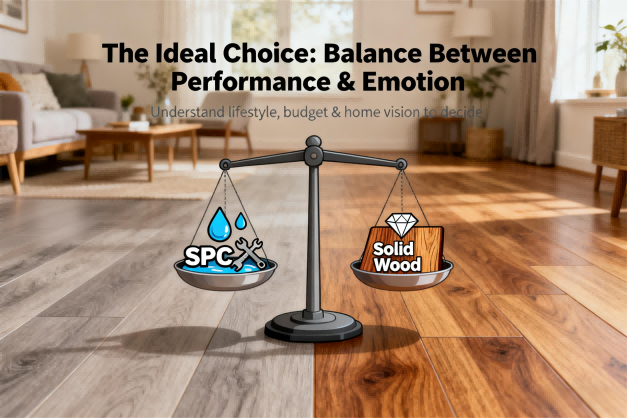
In the professional field, these two products have already found their respective stable market positions. The rise of SPC has not brought an end to the era of solid wood; it merely offers consumers a powerful tool that does not require compromise on aesthetics in the face of harsh realities. Ultimately, the most ideal choice is to find the perfect balance point between performance and emotion, short-term needs and long-term value after thoroughly understanding one's own lifestyle, budget and vision for home.