How does SPC flooring differ from ordinary or multi-layer laminate, and which is better?
SPC Flooring vs. Laminate flooring/Multi-layer laminate flooring: A comprehensive professional Comparative analysis
In today's booming floor materials market, SPC (Stone Plastic/Polymer Composite) Flooring and traditional Laminate Flooring are both popular and durable choices. Both fall under the broad category of "rigid core" flooring, offering excellent durability and relatively easy installation. However, their core structure, material composition and performance characteristics determine that they are suitable for completely different environments. Understanding these differences is the key to making wise investment decisions.
Part One: Core Differences - Deconstructing Its Composition and Craftsmanship
To understand their performance differences, it is first necessary to dissect their "anatomical structure". This is like comparing A gasoline car with an electric car - both can take you from Area A to Area B, but their internal operation mechanisms and energy handling methods are completely different.
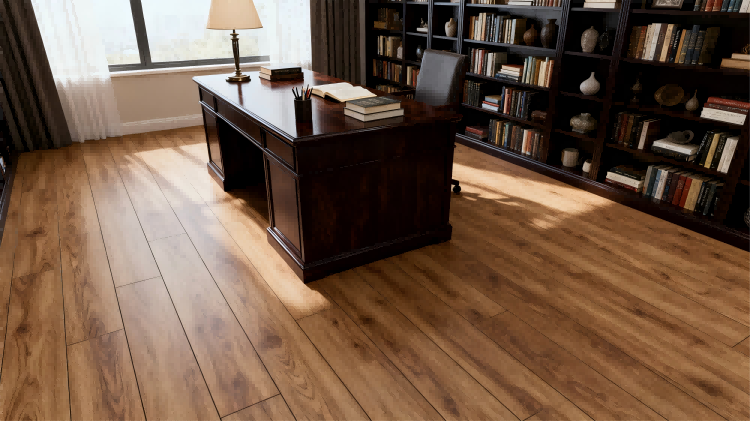
Laminate Flooring: The expert of wood-based simulation
Traditional laminate flooring is a multi-layer synthetic product with a longer history. Its structure is usually as follows:
Wear Layer: The topmost layer is a transparent Aluminium Oxide coating, which is extremely hard and responsible for resisting scratches, wear and stains. Its quality is measured by "AC rating" (Abrasion Class), ranging from AC1 (for light residential use) to AC6 (for heavy commercial use). This is the first line of defense for the durability of laminate flooring.
Decorative Layer:This is a high-resolution printed image, usually imitating the texture of wood, stone or tiles. Its realism determines the aesthetic appeal of the floor. In recent years, the embossing synchronous technology has enabled the surface texture of the floor to be consistent with the concave and convex of the decorative pattern, greatly enhancing the sense of reality.
Core Layer: This is the most fundamental difference between traditional laminate flooring and SPC. The core layer is mainly made of high-density fiberboard (HDF) or medium-density fiberboard (MDF). This is a wood-based material made by bonding wood fibers with resin adhesive under high temperature and high pressure. Its advantages are hardness, smoothness and high cost-effectiveness.
Backing Layer: The bottom layer is a resin-impregnated film designed to counteract surface tension, prevent floor warping, and provide a certain degree of moisture resistance.
The key point: The "Achilles' heel" of laminate flooring lies in its HDF core. Although HDF is very hard, it is essentially dense wood fiber and extremely sensitive to moisture. Any continuous exposure to moisture will lead to irreversible damage.
SPC flooring (Stone Plastic composite flooring) : A mineral-based waterproof fortress
SPC is a more modern and technologically advanced member of the rigid core flooring family. Its structure is also multi-layered, but the materials have undergone revolutionary changes:
Wear Layer: Similar to laminate flooring, it is usually a transparent polyurethane (PU) or enhanced UV coating that provides scratch protection. The wear-resistant layer performance of high-end products is in no way inferior to that of the aluminum oxide in laminate flooring.
Decorative Layer: A high-definition vinyl or PVC layer printed with decorative patterns. Its texture is usually synchronized with the wear-resistant layer through the embossing process, providing a more realistic touch.
Core Layer: This is the "heart" of SPC flooring and the origin of its name. It is mainly made by mixing limestone powder (calcium carbonate), polyvinyl chloride (PVC) and stabilizers, and then extruding them under high temperature and high pressure. The finished product is extremely dense, hard and heavy, similar to a stone slab. This core is inert and does not react to moisture.
Backing Layer/Attached Underlayment: Many SPC floors are pre-attached with a layer of cork or IXPE (cross-linked polyethylene) foam cushion, which serves to insulate sound, keep warm and enhance the comfort of the foot feel. This is the standard configuration, not an additional option.
The mineral-based core of SPC endows it with unparalleled dimensional stability and complete water resistance. It is not a "waterproof" layer, but rather its core is a material that "water cannot damage".
Part Two: Head-on Confrontation of Key Performance Indicators
Based on the above structural differences, let's compare their performance in the real world, which will directly determine your choice.
Waterproof and moisture-proof performance: The decisive battle
This is the most fundamental dividing line between the two.
SPC flooring is 100% waterproof. You can install it in the bathroom, kitchen, basement or even commercial kitchen without any worries. Even if a pipe leak occurs and the floor is soaked, as long as the water is removed, the floor itself will not be damaged in any way. Its core will not be decomposed by water or expand. In foreign product descriptions, you will see clear labels such as "Waterproof" or "100% Waterproof".
Laminate flooring is usually described as moisture-resistant or having certain moisture-proof properties, but it is by no means waterproof. Its HDF core is like a thick cardboard. Once water seeps into the lock at the edge or the environmental humidity is too high (such as in some basements), the core will absorb water and expand, causing the floor surface to bulge and the edges to warp. Moreover, this kind of damage is permanent and cannot be repaired. Although "waterproof composite flooring" has emerged in the market, its principle is to add a waterproof coating or plastic layer on the HDF core. However, once the surface is damaged, water can still penetrate the core, and the risk still exists.
Conclusion: In any area with moisture risk, SPC is the only reliable option.
Dimensional stability and temperature resistance
SPC flooring has an extremely low rate of thermal expansion and contraction. Its stone plastic core is not sensitive to temperature changes and can be installed in areas with direct sunlight, over radiant floor heating (floor heating system), or places with large temperature differences without worrying about the bulging or shrinking of the joints causing gaps. This is another huge advantage of it.
The wooden core of laminate flooring will "breathe" with changes in environmental temperature and humidity, that is, absorb or release moisture, thereby causing slight expansion and contraction. When installing, sufficient expansion joints must be reserved at the edge of the floor; otherwise, warping may occur during the humid season. Although it can also be installed on floor heating, higher requirements are placed on its stability.
Foot feel, comfort and sound insulation
This is one of the few areas where traditional laminate flooring may have an advantage.
The foot feel of SPC flooring is usually described as hard and cold. Due to its extremely high core density, the stepping sensation is closer to that of ceramic tiles. Although the attached base pad provides a certain degree of cushioning and sound insulation, its inherent hardness means that the footsteps will produce a greater echo and feel less warm. In multi-storey residential buildings, additional attention may be needed to sound insulation issues to meet the requirements of the floor impact sound (IIC) rating.
Laminate flooring offers a relatively warm and slightly elastic foot feel. The combination of the HDF core and the base pad can better absorb shock, making it more comfortable to walk on. It is especially suitable for areas where one needs to stand for a long time, such as the kitchen. Its sound insulation performance is usually also superior to that of standard SPC.
Durability and impact resistance
Both perform exceptionally well in terms of surface scratch resistance and wear resistance under the same quality. But they are different in terms of impact resistance.
The surface of SPC flooring is highly scratch-resistant, but its hard stone plastic core may crack or dent when subjected to extreme point-like heavy impacts (such as a heavy, sharp-edged object falling), as it is harder but also more brittle.
When the HDF core of laminate flooring is impacted, it may develop dents, but it is less likely to crack like SPC.
Environmental protection and health considerations
Both have environmental protection aspects that need attention, but their focuses are different.
The main concern of laminate flooring is formaldehyde emissions. The resin adhesive used in its HDF core may contain formaldehyde. In North America and Europe, high-quality laminate flooring must meet strict formaldehyde emission standards, such as CARB ATCM Phase 2 in California or E1 in Europe, or even the more stringent E0 standard. It is crucial to look for these certifications when making a purchase.
SPC flooring is made of PVC, and its environmental concerns lie in vinyl chloride, phthalates (plasticizers), and VOCs (volatile organic compounds). It is very important to choose a brand with a good reputation. They will use safer and more stable plasticizers and ensure that their products have passed indoor air quality certifications such as FloorScore or GREENGUARD, proving that their VOC emissions are extremely low.
Part Three: Professional Selection Guide - Which One Suits You Better?
Now, we can answer the question "Which one is better?" : The answer entirely depends on your installation environment, budget and personal preferences.
Please choose SPC flooring without hesitation in the following circumstances:
1.High humidity or areas in direct contact with moisture: This is the absolute domain of SPC. Including bathrooms, kitchens, laundry rooms, basements, bar areas, and a foyer directly connected to the outside, etc.
2.Installed on the floor heating system: The excellent dimensional stability and thermal conductivity of SPC make it the perfect partner for floor heating. It will not deform due to heat and can efficiently transfer heat, improving energy efficiency.
3.Commercial premises or residential areas with high traffic flow: Its outstanding stability and complete water resistance make it highly suitable for environments such as coffee shops and retail stores that require frequent and deep cleaning.
4.ursuing ultimate stability and the peace of mind of "once and for all" : If you hope that the floor will hardly deform in the years to come, especially in regions with variable climates, SPC is a more reliable choice.
Laminate flooring may be a wiser choice in the following circumstances:
1.For dry areas of residences with strictly limited budgets: If you are constructing in completely dry areas such as living rooms, bedrooms, and studies and your budget is tight, laminate flooring offers unparalleled cost performance and the authenticity of wood grain.
2.High demands for foot feel and comfort: If you don't like the hard touch of tiles and hope that the floor feels warmer and more elastic, laminate flooring (especially models with high-quality underlays) will be more comfortable.
3.There are strict requirements for sound insulation in the upper space: In upper bedrooms or apartments that need quietness, laminate flooring usually offers better sound insulation and lower sound transmission.
4.Personal concerns about PVC products: If you are extremely concerned about the life cycle of PVC and VOCs issues, and prefer properly handled wooden products, then choosing a laminate flooring with top-level formaldehyde emission certification may better align with your values.
Conclusion
From a professional perspective abroad, the floor materials industry is clearly moving towards the core directions of waterproofing and rigidity. SPC represents the technological frontier of this trend. It has successfully addressed the biggest weakness of traditional laminate flooring - its fear of water. As a result, its market share has continued to grow globally.
However, laminate flooring is not out of date. Its aesthetic appeal, comfort and cost-effectiveness in dry environments still hold strong appeal. It offers one of the most economical options among the classic wooden floor appearances.
Final suggestion
When making a decision, go beyond the simple question of "Which one is better?" and instead consider: "What are my specific installation environment, lifestyle and budget?"
For the vast majority of modern families, especially considering the future resale value and potential unexpected water damage (such as pipe leaks, pet accidents), investing in SPC flooring is usually a safer and more future-proof choice. Its water resistance offers you invaluable peace of mind.
For areas located upstairs, absolutely dry, with a limited budget and a pursuit of comfortable foot feel, a high-quality laminate flooring with a high AC rating (such as AC4 or above) can also provide satisfactory service for many years.