What occurs if water gets beneath SPC flooring?
Professional analysis of water seeping under SPC flooring: Causes, Consequences and solutions
I.How does water seep under the floor?
Before understanding the consequences, it is necessary to first understand the ways water invades:
1.Moisture from the ground floor:
Moisture in concrete base: Newly built or low-rise concrete slabs (slabs) will continuously release moisture. If an effective moisture test is not conducted before installation, or the proper vapor barrier is not laid, underground water vapor will seep up slowly but continuously.
Wooden base leakage: Leakage from upper-level pipes (such as dishwashers, refrigerators, ice makers, bathrooms), water seepage through Windows or roof leakage can cause water to spread to the lower ceiling and floor base.
2.Installation error or insufficient protection:
Missing or damaged moisture-proof layer: When installed on the concrete base, 6-mil polyethene vapor barrier (6-miley polyethylene moisture-proof film) is absolutely necessary. Its absence, non-overlapping sealing at the seams or being punctured will all provide channels for water vapor.
Improper edge sealing: If the expansion gap along the wall is not properly covered by the baseboard, or if waterproof glue is not used to seal the joints in damp areas such as the kitchen and bathroom, water will flow into the floor from the side.
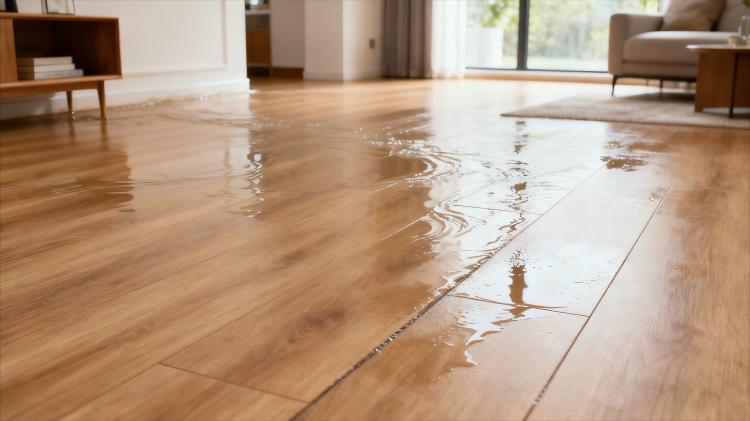
3.Major flood events
Such as a burst washing machine hose, a toilet overflow or regional flooding. A large amount of water will quickly rush into the floor from the edges, seams or any openings.
Ii. Specific consequences of water seeping beneath: Failure of a chain reaction system
Once water gets trapped beneath the SPC floor, a "time bomb" is activated. Its destructive power is not limited to the floor itself, but also concerns the entire ground system.
1. Damage to the grassroots level - the most serious and costly consequence
Wooden base layer (plywood, OSB oriented strand board) :
Warping and swelling: The wooden base layer will expand after absorbing moisture. This expansion is uneven, causing the base surface to no longer be flat (referred to as "crowning" or "dishing"). An uneven base layer can directly cause the SPC floor above to become loose, make abnormal noises or even break the lock.
Rot and structural failure: Persistent dampness can cause wood to rot, reducing its load-bearing capacity. When repairing, the base layer of the entire damaged area needs to be cut off and replaced, which is an extremely expensive project.
Concrete base layer
Alkaline salt precipitation: The moisture in the concrete will dissolve the alkaline salts. When the moisture evaporates through the gaps in the moisture-proof layer to the back of the SPC floor, these salts will crystallize to form white powder, which is called efflorescence. These crystals can accumulate and exert point-like pressure on the back of the floor, which may lead to "telegraphing", that is, seeing tiny protrusions on the surface.
A breeding ground for mold: Concrete itself does not mold, but the dust and moisture adhering to its surface combine to provide a perfect nutrient base for mold.
2. Mold and mildew growth - a serious health hazard
This is the most underestimated but most dangerous consequence. The dark, damp and poorly ventilated environment beneath the floor is an ideal breeding ground for Mold and Mildew.
Health risks: Mold releases spores and microbial volatile organic compounds (MVOCs), which can enter living Spaces through floor joints, pipe openings and ventilation systems, causing allergies, asthma, respiratory infections, persistent headaches and immune system problems. It is especially harmful to children, the elderly and those with weakened immune systems.
Black mold: Although any mold needs to be dealt with, "Stachybotrys chartarum" (black mold) is particularly worrying as it can produce mycotoxins, posing a serious threat to health.
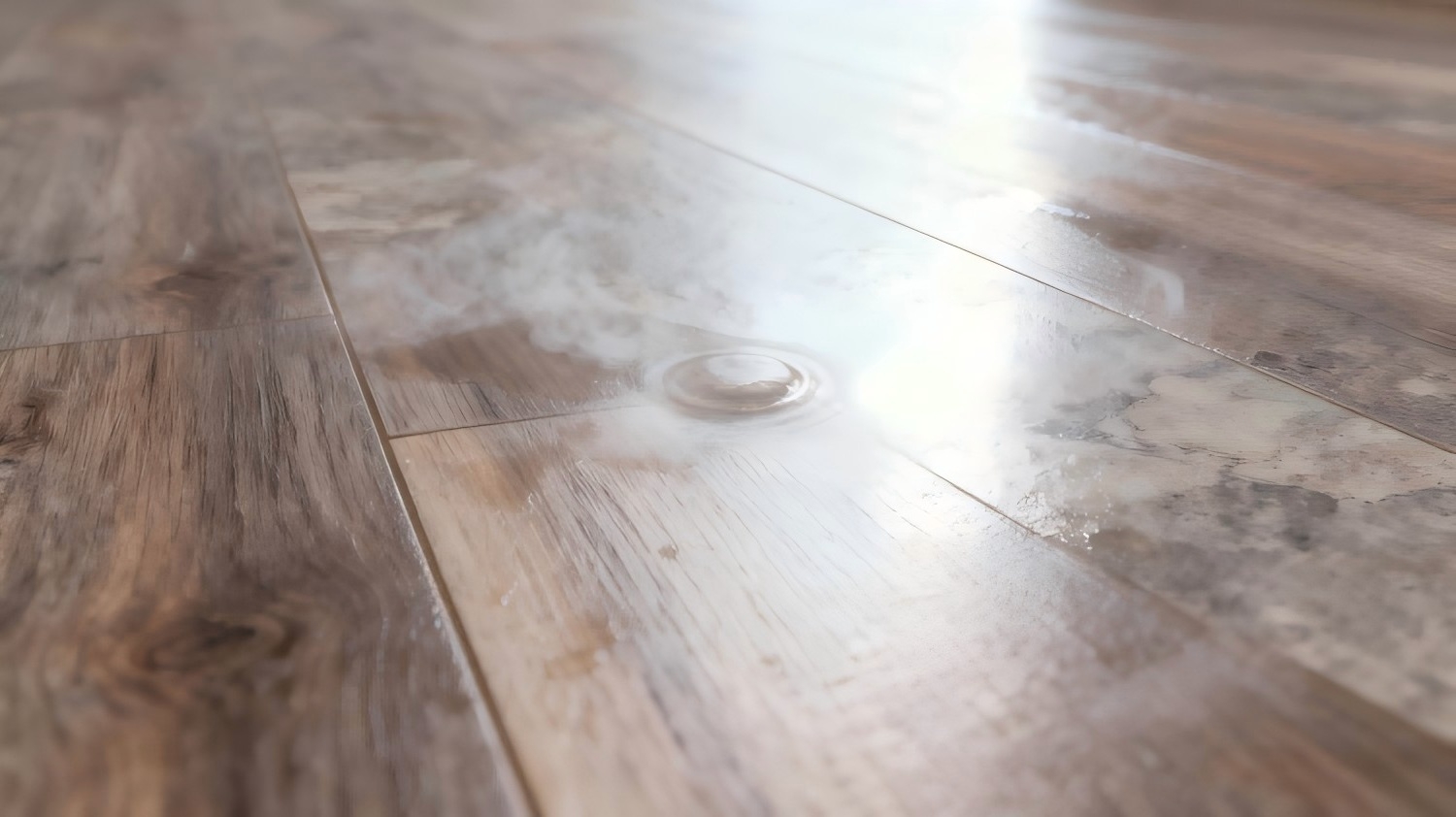
Odor: The reproduction of mold can produce a strong and hard-to-eliminate musty smell.
remediation cost: Mold remediation needs to be carried out by professional companies, including isolating the area, using HEPA-filtered air purifiers, and removing contaminated materials (floors and parts of the base layer), which is extremely costly.
3. Failure of the floor system itself
Although the SPC core material does not absorb water, the entire installation system will fail.
Damage to the lock system
Pre-coated adhesive failure: Many SPC flooring locks (tongue-and-groove) come with pre-coated waterproof strips (such as Unilin's 5G lock). Long-term soaking in water will cause these rubber strips to lose their effectiveness.
Physical deformation: In extreme cases, although the SPC itself is stable, the precise structure of its lock may slightly deform due to the huge pressure caused by the swelling of the base layer or extreme changes in water temperature, leading to the loosening of the lock.
Manifestation: The failure of the lock can cause gaps in the floor, loose connections between the panels, and a "clicking" sound or a feeling of sinking when walking on it.
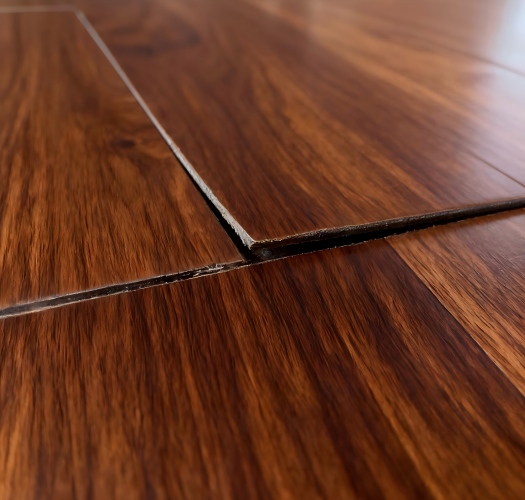
Warping and arching
Arching: When the base layer expands or the floor itself expands due to heat/moisture, as the expansion joints along the wall are blocked, the floor has no place to expand and can only rise upwards, forming a "tenting" (tent-like bulge).
Edge warping: If the moisture mainly comes from the base layer, the edges of the floor may be lifted.
Dyeing and trace transmission
Water containing impurities (such as sewage or water with rust) will leave the impurities on the back of the SPC floor after evaporation. Sometimes these stains are dark enough to show through the floor material on the surface, causing permanent discoloration.
4. Unpleasant odors and decline in indoor air quality
As mentioned earlier, mold and mildew are the main sources. In addition, the long-term damp wooden base and stagnant water that may be trapped can also produce the smell of rotten organic matter, seriously affecting the living comfort.
Iii. Professional Diagnosis and Repair Process
Once water is suspected to be under the floor, immediate action should be taken.
1. Diagnostic signs
Visual: New gaps, warping and arching appear on the floor.
Touch: The floor feels soft and elastic (spongy), or there is an abnormal noise when stepped on in some areas. The corner of the wall might feel damp.
Smell: Persistent musty or earthy smell.
Instrument: Professionals will use the moisture meter. There are two types:
Needle-type moisture meter: The probe can be inserted into the floor joint to measure the moisture content of the base layer. For wood, a reading over 16% indicates dampness. For concrete, a relative humidity test (ASTM F2170 standard) is required.
Needle-free moisture meter: It can scan large areas non-contact and quickly locate abnormal moisture areas.
2. Professional repair steps:
Step 1: Stop the water supply. Locate and repair the leakage point. This is the prerequisite for all the repair work.
Step 2: Assess the extent of the damage. Remove the skirting boards in the affected area and carefully dismantle several rows of floor panels. Check the base layer and the back of the floor.
Step 3: Drying process.
Removal and ventilation: Sufficient floor slabs must be removed to expose the damp base layer.
Professional equipment: Forced drying is carried out using air movers and dehumidifiers. This process may take several days and the moisture content of the base layer must be reduced to a safe level (less than 12% for wood).
Note: Simply blowing a fan at the floor surface is ineffective; instead, it may blow mold spores into the air.
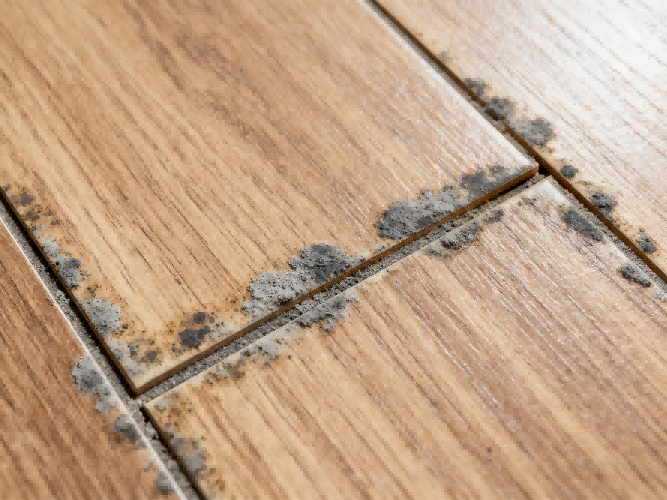
Step 4: Mold repair. If mold is found, it must be dealt with by a qualified company. This includes physical removal and the use of EPA-approved disinfectants.
Step 5: Replace the materials.
Base: Any damaged wooden or concrete base must be replaced or repaired.
Flooring: Once SPC flooring is removed, its locking system is very likely to be damaged and cannot be perfectly reinstalled. New floor panels must be used for replacement. One of the biggest challenges is color matching, as there may be subtle differences in dyes from different production batches.
Step 6: Reinstall correctly. Make sure the new moisture-proof layer is laid correctly and leave sufficient expansion joints.
Iv. Professional Preventive Measures: Nip problems in the bud
Prevention is far better than cure.
Thorough environmental control before installation
Moisture test: A relative humidity test (ASTM F2170) must be conducted on the concrete base layer. Use a needle moisture meter on the wooden base layer. Make sure the readings are within the range allowed by the manufacturer (typically RH≤75% for concrete and MC≤12% for wood).
Lay the moisture-proof layer: On the concrete base, lay 6-mil polyethylene moisture-proof film, overlap the joints by 8 inches and seal them with waterproof tape.
Correct installation process
Adapt to the environment: Place the SPC flooring in the original installation environment for 24 to 48 hours to allow it to adapt to the temperature and humidity.
Keep expansion joints: Leave appropriate expansion joints (usually 1/4 inch to 1/2 inch) along all walls, pipes and doorways, and cover them with skirting boards.
Sealing in damp areas: In areas such as kitchens and bathrooms, consider using 100% silicone for waterproof sealing around the entire floor or at the joints.
Daily Maintenance and vigilance
Immediately clean up spills: Although the surface is waterproof, it should still be dried in time.
Avoid mopping the floor with a lot of water: Use a slightly damp mop instead of one that is fully soaked in water.
Regular inspection: Check the connection points of household appliances, under the sink and other areas prone to leakage.
Conclusion
From a professional perspective, water seeping under the SPC floor is a serious system failure event. The core issue does not lie in whether the SPC board itself will "rot", but in the series of chain reactions it triggers: structural damage to the base layer, health risks brought by mold, and functional failure of the entire floor system. Restoration work is highly invasive, time-consuming and expensive, usually involving large-scale demolition, professional drying and material replacement.
Therefore, the correct understanding is that SPC flooring is an excellent surface waterproof material and is suitable for most household Spaces. However, the core of its success lies in professional installation and strict moisture management to ensure that the environment at its bottom is always dry. In any flood incident, time is crucial. A prompt and professional response is the only way to minimize losses to the greatest extent.